


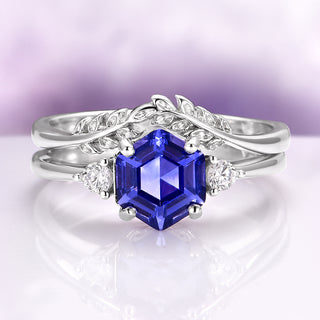
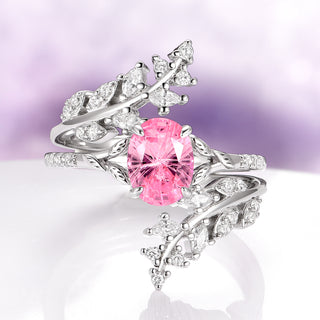
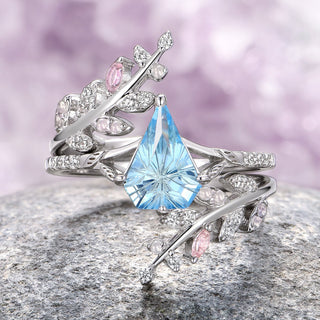


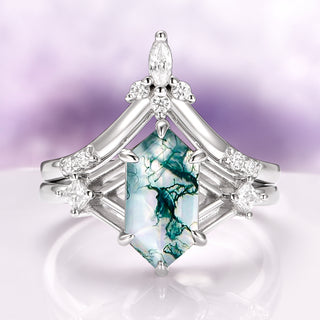
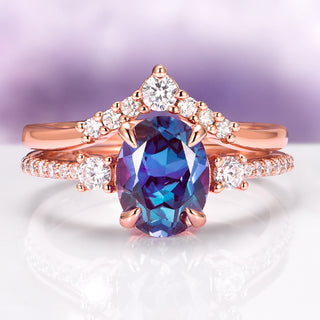


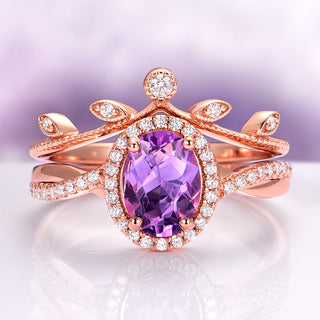


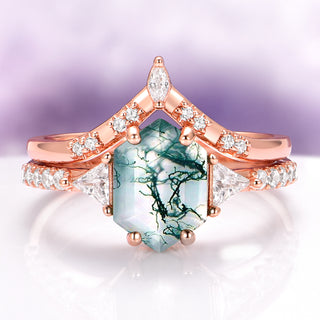
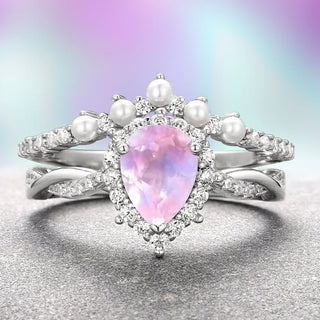

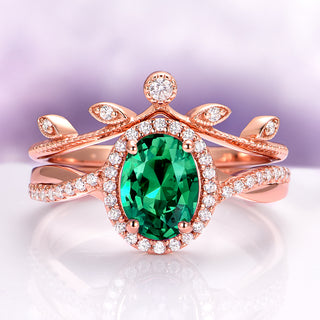
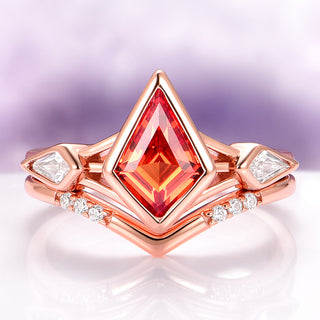
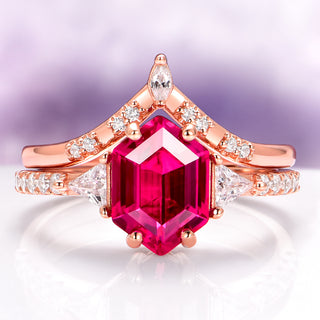
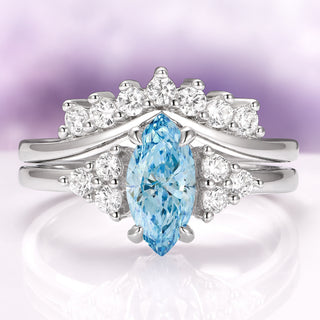
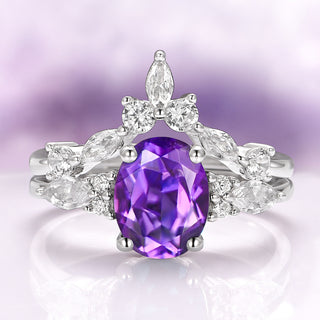
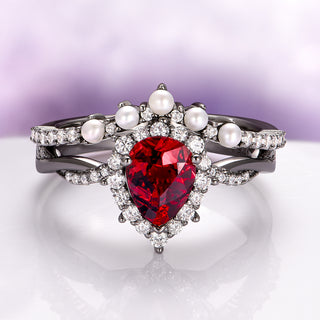


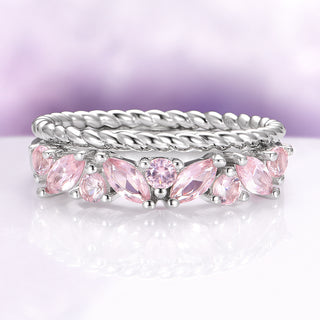

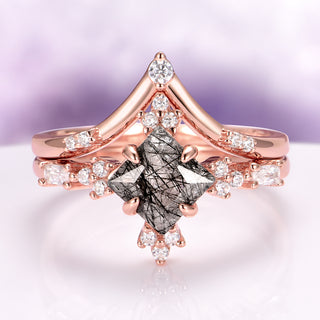

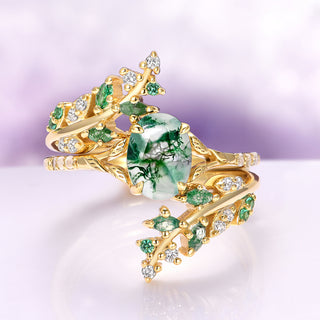

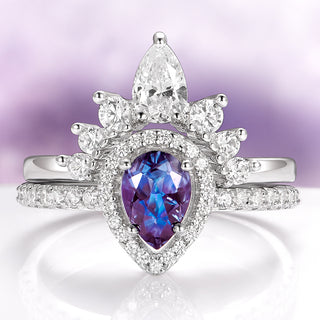


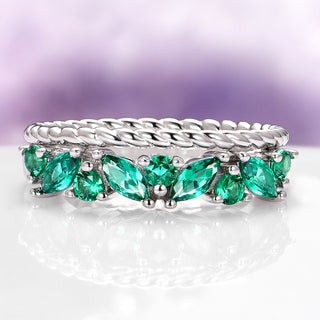
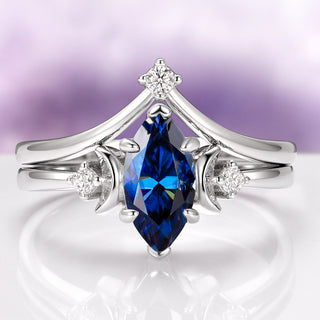


A good ring stack looks inevitable — three or four bands that read as one composed piece rather than a drawer emptied onto a finger. This page is both the collection and the method: 550+ stacking rings and nesting sets in sterling silver, 14K gold vermeil, and solid gold, organized around how stacks are actually built.
Stacking Rings: Build a Stack That Reads as One Piece
The difference between a composed stack and a cluttered one is structure. Start with an anchor — the ring with the most presence, often a stone-set band or an engagement ring. Add an accent that repeats one element of the anchor: its metal, its stone color, or its curve. Finish with a breather — a thin plain band that gives the eye a rest. Most of the sets on this page are pre-composed around exactly that logic, which is why they look right out of the box.

The Anchor-Accent-Breather Rule
Every stack that works has a hierarchy. The anchor carries the visual weight — a pear-cut stone, a chevron with a center gem, a cluster band. The accent supports it: a pavé band echoing the anchor's sparkle, or a curved band tracing its silhouette. The breather is the thin, plain ring that keeps the whole thing from shouting. Two anchors fight; three accents blur; the rule holds at any budget.
Chevron and curved bands deserve special mention because they solve the hardest stacking problem: a center stone that leaves a gap above a straight band. A V-shaped or arced ring nests around the stone instead of colliding with it, which is why so many sets here pair a pear or kite cut with a chevron band shaped to receive it.
Mixing Metals Without Looking Accidental
The old rule said never mix silver and gold; the current one says mix them on purpose. The trick is repetition: one rose gold band in a silver stack reads as a mistake, but two — separated by a silver breather — read as a choice. Keep undertones consistent (rose gold flatters the same hands warm-toned yellow does), and let one metal hold the majority. Our yellow vs. white vs. rose gold guide covers which tones suit which skin, and the same logic drives a mixed stack.
Stone color is the second mixing axis. A stack can run monochrome — three aquamarine bands deepening in saturation, drawn from aquamarine rings — or complementary, like morganite against silver, or moonstone's glow against warm vermeil from the moonstone collection. One colored stone per stack is composed; three different colors is a carnival, wonderful only if that is the brief.

The Geometry of a Stack: Widths, Gaps, Curves
Total width is the constraint nobody mentions: past roughly 8mm of combined band, a stack stops flexing with the finger and starts fighting it. Three bands at 1.5–2.5mm each is the comfortable ceiling for most hands, which is exactly the width range the bands on this page are cut to. Vary widths within the stack — a 2.5mm anchor between 1.5mm neighbors — and the composition gains rhythm without gaining bulk.
Deliberate gaps matter too. A curved or chevron band creates negative space that keeps a stack breathing; an open V above a stone frames it like a crown. These are the styling moves the pre-composed sets here are built around, so the geometry arrives already solved.
Stacking Rings vs. Stackable Rings — Which Page Do You Need?
They are near-synonyms in search, so we keep the division simple. This page owns the styling: how to compose a stack, mix metals, and pair curved bands with stones — the how-to lane, with sets pre-built around those principles. The stackable rings collection owns the product lane: the full catalog of slim individual bands — over a thousand of them — to buy one at a time and compose yourself. If you want a finished composition, stay here; if you want the raw material, go there.
A Stack That Lives on One Finger
Bands that ride together need slightly more care than a solitary ring: grit works into the seams between them, so remove the stack for gym sessions and sandy days, and clean the rings separately with lukewarm water and mild soap. The at-home cleaning guide covers each metal, and complimentary engraving lets each band in a stack carry its own line of a longer message.
Every ring ships worldwide with insured delivery and a 14-day return window on non-customized pieces. We hold a 4.9-star average across 38,000+ reviews collected on our store and on Etsy, where we have sold since 2016. Sets and single bands alike run in sterling silver, vermeil, and solid gold.
From the Journal

Yellow Gold vs White Gold vs Rose Gold
Yellow gold vs white gold vs rose gold compared: how each color is made, durability, skin-tone matching, care, and which gold color is right for your ring.

How to Care for Your Engagement Ring: When to Take It Off & Maintenance Tips
Your love is bulletproof — your ring is not. A complete guide to when to remove it, how to clean every metal safely, gemstone-specific care for moss agate, opal, moissanite...

How to Clean Jewelry at Home: Safe Methods for Every Metal & Gemstone
Almost every piece can be cleaned at home — but the method has to match the material. A jeweler's guide to the universal soap-and-water method, metal-by-metal and gem-by-gem instructions, ultrasonic...

What Hand Does an Engagement Ring Go On?
The short answer is the left ring finger — but this guide covers the vena amoris tradition, which finger is the ring finger, the countries that use the right hand,...
Stacking Rings FAQs
“I absolutely love this set! Ring has great sparkle to it.”
“I absolutely love my ring. It's gorgeous. Fits great.”
“I loved it so much! The stone is beautiful and I can't stop looking at it in the sun.”
“It is so delicate and lovely and the set looks amazing!”