


Birthstones by Month: The Complete Guide to Every Gemstone
Birthstones connect us to a tradition older than empires. Each gemstone carries centuries of meaning, rooted in the Breastplate of Aaron from the Book of Exodus, where twelve stones represented the twelve tribes of Israel. Birthstones by month, as we know them today, were first standardized in 1912 by the National Association of Jewelers in Kansas City. Since then, the list has been updated in 1952, 2002, and 2016, and now includes both traditional and modern options. This Aquamarise® guide covers all twelve months, colors, meanings, Mohs hardness, and care tips. For a deeper dive into how this tradition evolved, explore our birthstone jewelry history.


Modern Birthstones vs Traditional Birthstones
Traditional birthstones by month originated in 16th to 18th-century Polish customs. The birthstones by month we recognize today (the modern list) were standardized in 1912 and last updated in 2016 when spinel was added for August.
Some months have multiple birthstones, and traditional versus modern lists don't always match. For instance, the alternative birthstones by month include March, which offers aquamarine (modern) or bloodstone (traditional). June expanded from pearl to include alexandrite and moonstone. December? Four modern options with two traditional ones.
Key Differences
- March shifted from bloodstone to aquamarine as the primary modern stone.
- June added alexandrite and moonstone to the original pearl.
- August's modern list includes peridot and spinel; traditional was sardonyx.
- October gained tourmaline alongside opal.
- November added citrine to traditional topaz.
- December expanded with tanzanite, zircon, turquoise, and blue topaz.
Birthstones by Month Chart
Take a look at this list of birthstones by month, featuring both traditional and modern stones.
|
Month |
Modern Birthstone |
Traditional Birthstone |
Color |
|
January |
Garnet |
Garnet |
Deep Red |
|
February |
Amethyst |
Amethyst |
Purple |
|
March |
Aquamarine |
Bloodstone |
Blue / Dark Green |
|
April |
Diamond |
Diamond |
Colorless |
|
May |
Emerald |
Emerald |
Green |
|
June |
Pearl, Alexandrite, Moonstone |
Pearl |
White / Color-changing |
|
July |
Ruby |
Ruby |
Red |
|
August |
Peridot, Spinel, Sardonyx |
Sardonyx |
Yellow-Green |
|
September |
Sapphire |
Sapphire |
Blue |
|
October |
Opal, Tourmaline |
Opal |
Rainbow / Various |
|
November |
Citrine, Topaz |
Topaz |
Yellow / Orange |
|
December |
Tanzanite, Zircon, Turquoise, Blue Topaz |
Turquoise |
Blue |
Birthstone Colors by Month
Birthstones by month and color tell a rainbow story. While we think of January as deep red garnet and September as blue sapphire, most birthstones actually come in multiple colors. Garnet appears in green, orange, purple, and yellow. Sapphire exists in every color except red (which would make it a ruby). Tourmaline? Virtually every shade imaginable.
Color affects value dramatically. For sapphires, the rarest Kashmir blue commands the highest prices. For garnets, demantoid green and tsavorite green outprice standard red varieties. For tourmaline, the watermelon variety (with pink, white, and green in a single stone) is highly prized.
Here's a quick breakdown of all birthstones by month, along with their color variations.
|
Month |
Gemstone |
Primary Color |
Color Variations |
|
January |
Garnet |
Deep Red |
Green, orange, purple, yellow, pink |
|
February |
Amethyst |
Purple |
Pale lilac to deep violet |
|
March |
Aquamarine |
Pale Blue |
Blue-green to deep blue |
|
April |
Diamond |
Colorless |
Yellow, blue, pink, green, brown, black |
|
May |
Emerald |
Green |
Light to vivid deep green |
|
June |
Pearl, Alexandrite, Moonstone |
White / Color-changing |
Cream, pink, black (pearl); green to red (alexandrite) |
|
July |
Ruby |
Red |
Pink-red to deep pigeon blood red |
|
August |
Peridot, Spinel |
Yellow-Green |
Olive green (peridot); red, pink, blue, orange (spinel) |
|
September |
Sapphire |
Blue |
Pink, yellow, orange, green, purple (fancy sapphires) |
|
October |
Opal, Tourmaline |
Rainbow / Various |
White, black, fire opal; pink, green, blue, watermelon (tourmaline) |
|
November |
Citrine, Topaz |
Yellow / Orange |
Golden yellow to orange-brown (citrine); blue, pink, colorless (topaz) |
|
December |
Tanzanite, Zircon, Turquoise, Blue Topaz |
Blue |
Violet-blue (tanzanite); sky to deep blue (topaz and turquoise) |
January Birthstone: Garnet
With deep red hues like pomegranate seeds scattered across the stone, that's how garnet got its name, from the Latin granatum. The January birthstone doesn't just come in red, though. Green tsavorite, orange spessartite, and purple rhodolite garnet exist in virtually every color except blue.
Ancient warriors carried garnets into battle, believing the stone offered protection. Today, it symbolizes friendship, trust, and safe travel. The deep red varieties (pyrope and almandine) remain the most recognized January gemstone, but the diversity of this mineral family is staggering.
Garnet at a Glance
- Colors: Deep red (also green, orange, purple, yellow)
- Mohs Hardness: 6.5 to 7.5 (durable for daily wear)
- Mineral Family: Silicate group (almandine, pyrope, grossular, spessartite)
- Primary Sources: India, Sri Lanka, Tanzania, Madagascar, Brazil, USA
- Symbolism: Protection, friendship, trust, safe travel
- Care: Clean with warm soapy water; avoid steam cleaners for demantoid varieties


February Birthstone: Amethyst
Purple has always belonged to power. In the courts of Catherine the Great, amethyst was more than a gemstone; it was a statement of wealth and authority. Before Brazilian discoveries made it accessible, this February birthstone rivaled diamonds in value. Its rich violet glow adorned crowns and scepters, reflecting light in royal halls.
The name comes from the Greek amethystos, meaning “not intoxicated.” Ancient Greeks believed it kept the mind clear and protected against excess. Today, amethyst symbolizes calmness, clarity, wisdom, and protection. Ranging from soft lilac to deep violet, the most intense purple remains the most prized.
Amethyst at a Glance
- Colors: Purple (pale lilac to deep violet)
- Mohs Hardness: 7 (durable for everyday wear)
- Mineral Family: Quartz (silicon dioxide with iron impurities)
- Primary Sources: Brazil, Uruguay, Zambia, South Korea, Russia, USA
- Symbolism: Clarity, calmness, wisdom, sobriety, protection from negative energy
- Care: Clean with warm soapy water; avoid prolonged sun exposure, which can fade the color


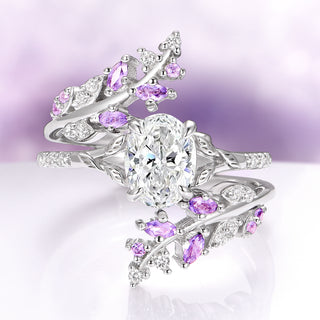
March Birthstone: Aquamarine
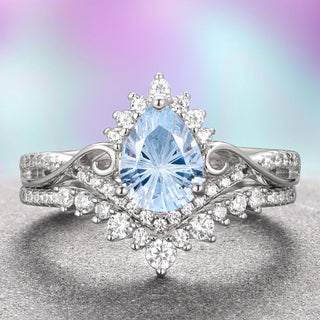
Water of the sea, captured in stone. The March birthstone gets its name from Latin aqua marina, and sailors once carried aquamarine as a talisman against ocean storms. Pale blue to blue-green, it evokes calm waters and clear skies.
This gemstone belongs to the beryl family, the same mineral that gives us emerald. The largest aquamarine ever found? A 110-kilogram crystal was discovered in Brazil in 1910. Today, aquamarine symbolizes courage, serenity, and clear communication. It's especially significant to Aquamarise's brand identity, where the stone's tranquil beauty inspires our designs.
Aquamarine at a Glance
- Colors: Pale blue to blue-green
- Mohs Hardness: 7.5 to 8 (excellent durability for rings and daily wear)
- Mineral Family: Beryl (same as emerald)
- Primary Sources: Brazil, Pakistan, Madagascar, Nigeria, Mozambique
- Symbolism: Courage, serenity, clear communication, safe voyages
- Care: Clean with warm soapy water or ultrasonic cleaner; avoid extreme heat, which can alter color



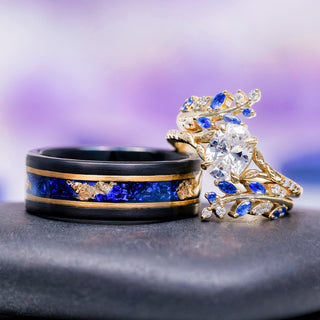
April Birthstone
Invincible, that is the origin of its name. Diamond, from the Greek adamas, is the hardest natural substance on Earth, a stone that can only be scratched by another diamond. As April’s birthstone, it has long stood as a symbol of enduring love, resilience, and unbreakable strength.
Formed deep within the Earth over billions of years, diamonds have always represented power and prestige. While the classic colorless stone remains iconic, diamonds also appear in yellow, blue, pink, and black. Today, lab-grown diamonds offer the same brilliance with a more ethical approach.
Diamond at a Glance
- Colors: Colorless (also yellow, blue, pink, green, brown, black)
- Mohs Hardness: 10 (hardest natural substance)
- Mineral Family: Pure carbon (crystallized under extreme pressure and heat)
- Primary Sources: Botswana, Russia, Canada, Australia, South Africa
- Symbolism: Eternal love, strength, clarity, invincibility
- Care: Extremely durable; clean with warm soapy water, ultrasonic, or steam cleaners
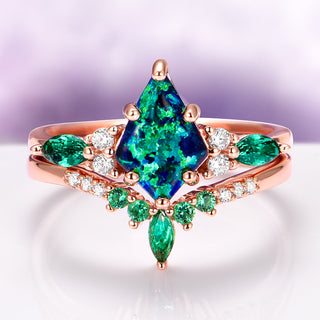
May Birthstone: Emerald
Emerald has long been a stone of devotion and desire. Worn by queens and revered in ancient Rome as a gem of Venus, it carried meanings of love, renewal, and power. As May’s birthstone, its vivid green reflects the energy of spring, growth, vitality, and life in motion.
Within each natural emerald lies a delicate world of inclusions known as jardin, French for “garden.” These are not imperfections, but signatures of time, formed slowly over millennia. Sourced largely from Colombia, the finest stones can rival diamonds in value. Part of the beryl family, emerald draws its rich green from traces of chromium and vanadium.
Emerald at a Glance
- Colors: Green (light to deep, vivid green)
- Mohs Hardness: 7.5 to 8
- Mineral Family: Beryl (colored by chromium and/or vanadium)
- Primary Sources: Colombia, Zambia, Brazil, Zimbabwe, Ethiopia
- Symbolism: Renewal, growth, fertility, foresight, good fortune
- Care: Moderate durability; avoid ultrasonic and steam cleaners; clean gently with warm soapy water only; remove before physical activity



June Birthstone: Pearl, Alexandrite, and Moonstone
June offers a rare trinity of beauty. Pearl, alexandrite, and moonstone each embody a distinct world that is organic, transformative, and ethereal, making this birth month unlike any other. Pearls are formed within living oysters, prized for their soft luster and purity.
Alexandrite, first discovered in Russia’s Ural Mountains, shifts from green in daylight to deep red by evening, a marvel of rarity. Moonstone glows with adularescence, a drifting light that feels almost otherworldly. Together, they capture Aquamarise’s vision of nature, mystery, and luminous design.
Pearl, Alexandrite, and Moonstone at a Glance
- Colors: White/cream (pearl), green-to-red (alexandrite), milky white with blue sheen (moonstone)
- Mohs Hardness: 2.5 to 3 (pearl), 8.5 (alexandrite), 6 to 6.5 (moonstone)
- Mineral Family: Organic (pearl), Chrysoberyl (alexandrite), Feldspar (moonstone)
- Primary Sources: Australia, Japan, China (pearl); Russia, Brazil, Sri Lanka (alexandrite); India, Sri Lanka, Madagascar (moonstone)
- Symbolism: Purity, wisdom (pearl); balance, adaptability (alexandrite); intuition, love, new beginnings (moonstone)
- Care: Pearls are delicate; wipe with a soft cloth, store separately; avoid ultrasonic cleaners on all three


July Birthstone: Ruby
Crowned the “King of Gems” in ancient Sanskrit, ruby has long been a symbol of passion, power, and vitality. As July’s birthstone, its fiery red glow captures a depth of emotion no other gem can rival because it is intense, commanding, and unmistakably alive.
Ruby belongs to the corundum family, sharing its origin with sapphire, yet only the chromium-rich red stones bear its name. The most prized displays a “pigeon blood” hue, vivid red with a subtle blue undertone. Exceptionally rare, fine rubies over three carats can surpass diamonds in value and are long revered as stones of devotion, strength, and royal destiny.
Ruby at a Glance
- Colors: Red (pinkish-red to deep pigeon blood red)
- Mohs Hardness: 9 (second hardest natural gemstone)
- Mineral Family: Corundum (same as sapphire, colored red by chromium)
- Primary Sources: Myanmar, Mozambique, Madagascar, Thailand, Sri Lanka
- Symbolism: Passion, love, courage, protection, vitality
- Care: Excellent durability for all jewelry; safe with ultrasonic and steam cleaners

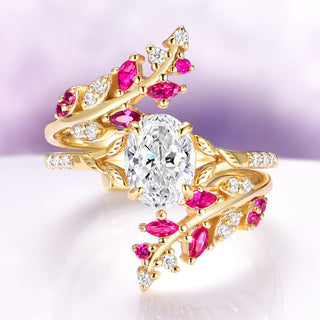


August Birthstone: Peridot, Spinel, and Sardonyx
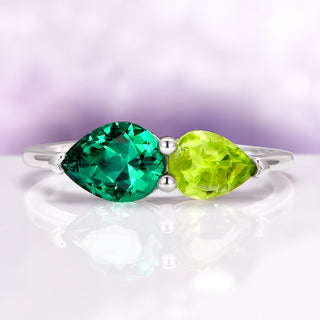
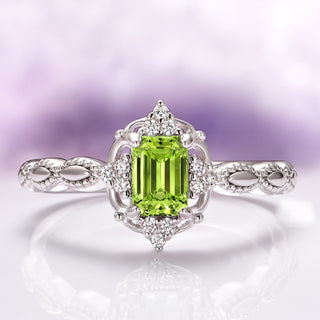
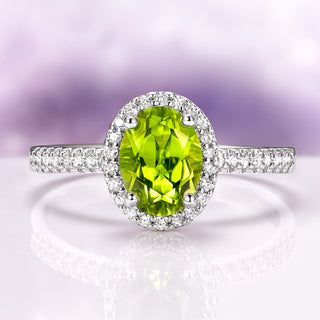
Ancient Egyptians called peridot the gem of the sun, its golden-green glow like light held within stone. Today, August offers a rare trio with peridot, spinel, and sardonyx, each with its own legacy and character.
Peridot is one of the few gemstones found in a single color, ranging from bright yellow-green to deep olive, and has even been discovered in meteorites. Spinel, long mistaken for ruby, carries a rich history; the famed Black Prince’s Ruby is in truth a vivid red spinel. Sardonyx, with its layered bands of red and white, remains a timeless emblem of strength and heritage.
Peridot, Spinel, and Sardonyx at a Glance
- Colors: Yellow-green to olive (peridot), various colors (spinel), reddish-brown, and white banded (sardonyx)
- Mohs Hardness: 6.5 to 7 (peridot), 8 (spinel), 6.5 to 7 (sardonyx)
- Mineral Family: Olivine (peridot), Magnesium aluminate (spinel), Chalcedony (sardonyx)
- Primary Sources: USA, Myanmar, Pakistan, China (peridot); Myanmar, Sri Lanka, Tanzania (spinel)
- Symbolism: Strength, energy, healing (peridot); revitalization, inspiration (spinel)
- Care: Peridot is moderately durable; avoid steam cleaners and rapid temperature changes; spinel is excellent for daily wear

September Birthstone: Sapphire
Sapphire has long been a stone of royalty and authority, chosen for its depth, restraint, and enduring elegance. As September’s birthstone, it symbolizes wisdom, loyalty, and nobility, qualities reflected in its velvety blue glow.
Though blue remains its most iconic shade, sapphire appears in nearly every color, each shaped by subtle trace elements. The rare padparadscha reveals a luminous blend of pink and orange, while historic Kashmir sapphires are revered for their unmatched richness. Part of the corundum family, only red stones are named ruby; everything else, in its many hues, is sapphire.
Sapphire at a Glance
- Colors: Blue (also pink, yellow, orange, green, purple)
- Mohs Hardness: 9 (second hardest natural gemstone)
- Mineral Family: Corundum (same as ruby, colored blue by iron and titanium)
- Primary Sources: Kashmir, Sri Lanka, Myanmar, Madagascar, Montana, Australia
- Symbolism: Wisdom, loyalty, nobility, truth, sincerity
- Care: Excellent durability for all jewelry; safe with all cleaning methods

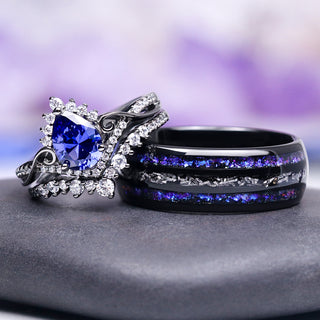

October Birthstone: Opal and Tourmaline
No two opals are ever the same. Each one dances with a rainbow of color, a play of fire that seems alive, capturing light and movement within its depths. Australia, the source of 95% of the world’s precious opals, has perfected this luminous art, making October’s birthstone a celebration of nature’s brilliance.
Tourmaline, October’s second gem, is a masterpiece of variety, coming in more colors than any other stone. Watermelon tourmaline, with its pink, green, and white layers, embodies the harmony of nature, a jewel that feels both organic and enchanted, perfectly suited for Aquamarise’s imaginative designs.
Opal and Tourmaline at a Glance
- Colors: Play-of-color rainbow flashes (opal), pink/green/blue/watermelon (tourmaline)
- Mohs Hardness: 5 to 6.5 (opal), 7 to 7.5 (tourmaline)
- Mineral Family: Hydrated silica (opal), Boron silicate (tourmaline)
- Primary Sources: Australia, Ethiopia, Mexico (opal); Brazil, Afghanistan, Mozambique, USA (tourmaline)
- Symbolism: Creativity, inspiration, hope (opal); compassion, tolerance, self-confidence (tourmaline)
- Care: Opals contain 3 to 21% water and are fragile; avoid heat, dryness, impacts; clean with a damp cloth only; tourmaline is more durable


November Birthstone: Topaz and Citrine
Topaz, November’s signature gem, glows with warmth and vitality. Imperial topaz, with its fiery orange and delicate pink undertones, is the rarest and most coveted, while blue topaz, mostly heat-treated, dominates modern jewelry with serene brilliance. Natural blue topaz remains extraordinarily rare, making each authentic stone a treasure.
Citrine, November’s second birthstone, mirrors sunlight in golden hues. True natural citrine is uncommon, with most commercial stones created by heating amethyst. Together, topaz and citrine offer November a spectrum of radiant warmth, embodying energy, optimism, and timeless elegance in every facet.
Topaz and Citrine at a Glance
- Colors: Orange, blue, pink, colorless (topaz); yellow to orange-brown (citrine)
- Mohs Hardness: 8 (topaz), 7 (citrine)
- Mineral Family: Aluminium silicate (topaz), Quartz (citrine)
- Primary Sources: Brazil, Sri Lanka, Nigeria, Russia (topaz); Brazil, Bolivia, Spain, Madagascar (citrine)
- Symbolism: Joy, abundance, generosity (topaz); success, energy, warmth (citrine)
- Care: Topaz has perfect cleavage along one axis; avoid sharp impacts; citrine is durable for daily wear; both are safe with warm, soapy water

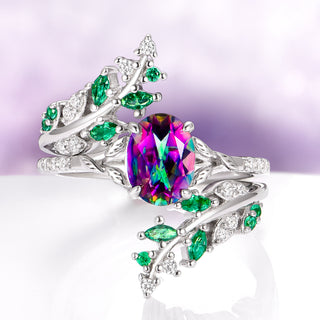


December Birthstone: Tanzanite, Zircon, Turquoise, and Blue Topaz
Tanzanite, discovered in 1967 in Tanzania’s Merelani Hills at the foot of Kilimanjaro, is a gem found nowhere else on Earth. Its deep, shifting blue made it December’s newest birthstone in 2002, a jewel of modern rarity.
December also offers a spectrum of choices. Turquoise, one of humanity’s oldest gems, has adorned jewelry for over 5,000 years with its serene, sky-blue charm. Zircon, a natural stone distinct from synthetic cubic zirconia, sparkles with classic brilliance. Blue topaz, durable and luminous, completes the month’s palette, offering elegance and enduring beauty in every facet.
Tanzanite, Zircon, Turquoise, and Blue Topaz at a Glance
- Colors: Violet-blue (tanzanite), blue/colorless/various (zircon), blue-green (turquoise), sky to deep blue (blue topaz)
- Mohs Hardness: 6 to 6.5 (tanzanite), 6.5 to 7.5 (zircon), 5 to 6 (turquoise), 8 (blue topaz)
- Mineral Family: Zoisite (tanzanite), Zirconium silicate (zircon), Copper aluminium phosphate (turquoise)
- Primary Sources: Tanzania only (tanzanite); Iran, USA Southwest, China (turquoise); Sri Lanka, Cambodia, Australia (zircon)
- Symbolism: Transformation, spiritual awareness (tanzanite); wisdom, prosperity (turquoise); clarity (zircon)
- Care: Tanzanite is relatively soft; requires protective settings for rings; turquoise is porous; avoid chemicals, perfumes, water; zircon is brittle despite its hardness; blue topaz is the most durable


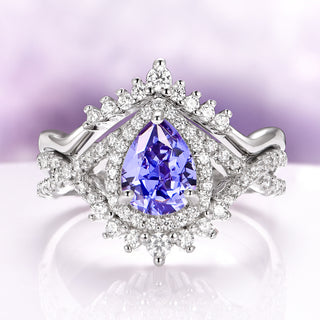
Zodiac Birthstones vs Monthly Birthstones
Zodiac birthstones by month follow a different system from calendar birthstones. Calendar birthstones align with the month you were born, a standard established in 1912. Zodiac birthstones follow your astrological sign's date range, which often spans two calendar months.
Some overlap exists. January babies born under Capricorn claim garnet as both their monthly and zodiac birthstone. But those born under Aquarius might claim amethyst as their zodiac stone while garnet remains their monthly birthstone.
Zodiac birthstones are less standardized, and the lists vary by tradition and culture. Hindu tradition offers the Navaratna, associating nine gemstones with celestial forces rather than birth months or zodiac signs, creating a framework rooted in Vedic astrology.
For those seeking birthstone jewelry rings, the choice comes down to personal preference. Do you connect more with your birth month or your astrological identity? The chart below shows how zodiac signs align with their traditional gemstones, helping you explore the astrological path.
|
Zodiac Sign |
Date Range |
Zodiac Gemstone |
|
Capricorn |
Dec 22 - Jan 19 |
Garnet |
|
Aquarius |
Jan 20 - Feb 18 |
Amethyst |
|
Pisces |
Feb 19 - Mar 20 |
Aquamarine |
|
Aries |
Mar 21 - Apr 19 |
Diamond |
|
Taurus |
Apr 20 - May 20 |
Emerald |
|
Gemini |
May 21 - Jun 20 |
Pearl |
|
Cancer |
Jun 21 - Jul 22 |
Ruby |
|
Leo |
Jul 23 - Aug 22 |
Peridot |
|
Virgo |
Aug 23 - Sep 22 |
Sapphire |
|
Libra |
Sep 23 - Oct 22 |
Opal |
|
Scorpio |
Oct 23 - Nov 21 |
Tanzanite |
|
Sagittarius |
Nov 22 - Dec 21 |
Turquoise |