


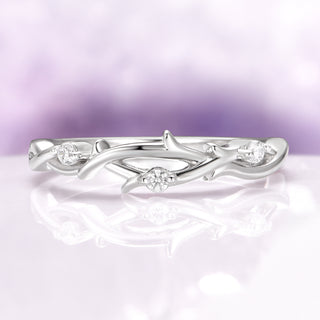


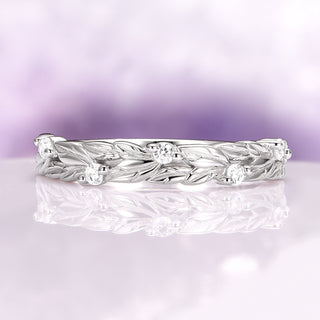

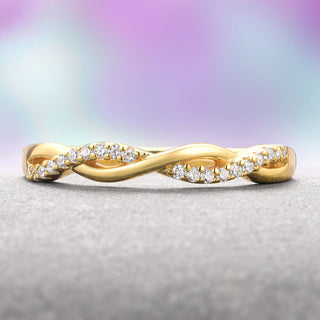


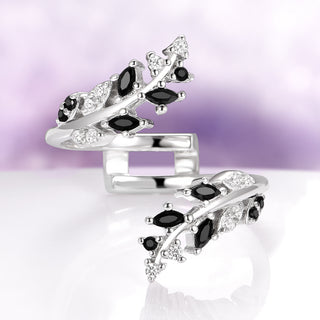
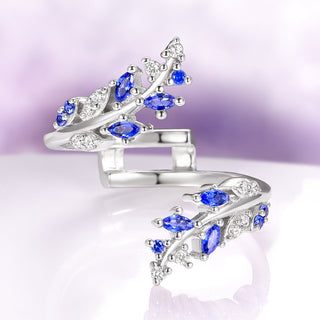
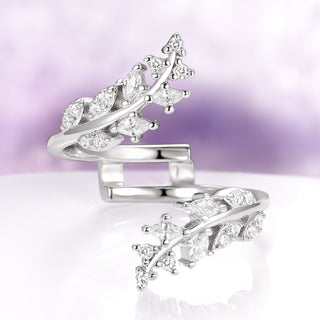


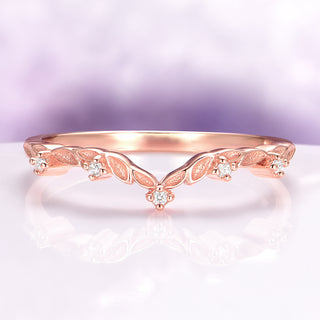


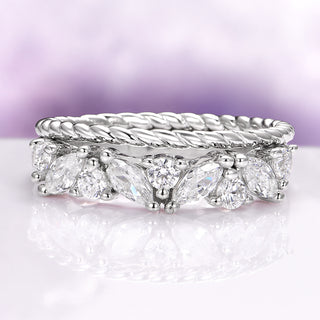


A wedding band is the ring you actually live in, and moissanite — silicon carbide, first identified by Henri Moissan in the Canyon Diablo meteorite crater in 1893 — is unusually well suited to the job. Its refractive index of 2.65 outruns diamond's 2.42, so a band lined with it throws visibly more rainbow fire as your hand moves, and at Mohs 9.25 it is the second-hardest stone in our store after diamond. Aquamarise® sets it across eternity, half-eternity, anniversary, and stacking designs in 925 sterling silver, 14K gold vermeil, and solid 14K gold.
Why a Moissanite Wedding Band Out-Sparkles Its Price
Because natural moissanite is vanishingly rare, every stone is lab-created by necessity — and that is exactly why a full circle of matched, eye-clean stones costs a fraction of its diamond equivalent. The fire that would be a five-figure indulgence in diamond becomes an everyday ring here, and each stone ships with its GRA certificate, always identified honestly as moissanite, never passed off as anything else.

Eternity, Stacking & Anniversary Styles — Choosing Your Coverage
Moissanite wedding bands sort themselves by how much of the circle carries stones. A full eternity band rings the entire circumference in fire — the maximal choice, and far more attainable in moissanite than in diamond because the price per carat stays low even as the stone count climbs. Half-eternity designs set the visible face only, keeping the underside smooth against the finger for all-day comfort. Stacking bands run thinner and are built to layer: two or three against an engagement ring, or worn alone as a minimal line of light. The same designs double as moissanite anniversary bands, marking a milestone with a stone that will never look dull beside the original ring. Women's moissanite wedding bands make up most of this collection, with men's designs in tungsten carbide and dark finishes alongside. To compare the stone against everything else we set in a band, start from women's wedding bands.
Moissanite vs. Diamond in a Wedding Band: the Honest Comparison
Three differences decide it. Fire: moissanite's higher refractive index disperses more light into rainbow flashes, so moissanite bands read livelier than diamond bands of identical size — some couples love this, others prefer diamond's whiter sparkle. Durability: Mohs 9.25 versus diamond's 10, and both shrug off daily wear; that gap matters far less than the one separating either stone from everything softer. Price: far lower per carat with near-identical daily-wear durability, which is why so many couples put the savings into a fuller band or a solid gold setting. One quirk worth knowing before you buy anywhere: moissanite's thermal properties fool basic diamond testers, which is precisely why we certify and label every stone honestly. If your heart is set on the mined or lab-grown original, our diamond wedding bands sit one collection over.
Metals for Moissanite Wedding Bands: Sterling, Vermeil & Solid Gold
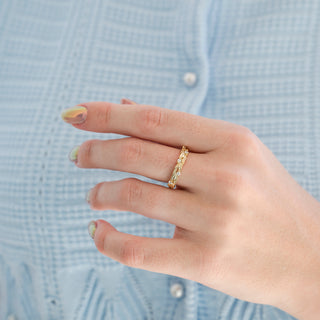
The metal decides how the fire reads. 925 sterling silver — a solid alloy that is 92.5% pure silver — is the accessible classic, finished in rhodium for a bright white surface that mirrors the stone's cooler flashes. 14K gold vermeil layers a full 2.5 microns of gold over that same sterling core, the FTC's own standard for the name, and warms the fire toward candlelight. Solid 14K gold — 58.5% pure, stamped 585 — is the heirloom route, made to order in yellow, white, and rose; our solid gold rings collection shows the full range. Whichever metal you choose, the stones themselves are identical: GRA-certified moissanite, matched for color and clarity across the band. Complimentary engraving marks a date or phrase inside any of them, and every band is handcrafted to order in its own workshop run rather than pulled from a warehouse shelf.
Pairing a Band with Your Engagement Ring
A band this adaptable pairs by echo or by contrast. Straight bands sit flush against low-profile solitaires, while contoured designs — browse curved wedding bands — trace around a larger center stone without leaving a gap. If the proposal ring came from our moissanite engagement rings collection, matching the band's stone is effortless, and his-and-hers pairs built to coordinate from the start are grouped under couples engagement ring sets.
Bands Only — Where the Rest of the Stone Lives
This page is the band aisle. The full stone-spanning ring range — solitaires, statement settings, every cut — lives in moissanite rings, and the same fire across necklaces and earrings is gathered in moissanite jewelry.
Every band is handcrafted to order and ships insured worldwide, with a 14-day return window on non-customized pieces. We hold a 4.9-star average across 38,000+ reviews collected on our store and on Etsy, where we have sold since 2016. For a width, stone, or metal you don't see here, the custom ring service builds it.
From the Blog

Is Moissanite A Lab-Grown Diamond?
Is moissanite a lab-grown diamond? No — here's the clear answer, why the two are confused, what each stone really is, whether moissanite is fake, and how to choose.

Does Moissanite Pass a Diamond Tester?
Does moissanite pass a diamond tester? Yes on a basic thermal tester, no on a dual thermal+electrical tester. The science, the scam, and how to tell them apart.

Moissanite vs Lab Diamond - Complete Comparison Guide
Moissanite vs lab-grown diamond compared: sparkle and fire, hardness, price, durability, how to tell them apart, and which is the better choice for your ring.

Moissanite vs Cubic Zirconia: Key Differences You Need to Know
Moissanite vs cubic zirconia compared: hardness, sparkle, how long each lasts, whether CZ clouds, price, and which diamond alternative is right for your ring.
Moissanite Wedding Bands FAQs
“It's way prettier in person. I love it and my husband does too.”
“I absolutely love this ring, it's like having a sliver of the night sky on my finger.”
“The ring was exactly what I asked for in the design. It actually looks more stunning in person.”
“I love this ring! So glad I purchased it! It's perfect for me!”