Your cart

Your cart is empty

Gradient background transitioning from purple to pink

Platinum Jewelry

Platinum jewelry in naturally white 950 platinum — rings, wedding bands and engagement settings. Platinum displaces metal when scratched instead of shedding it, so it never thins and never needs replating.

Skye Kite® Green Moss Agate Engagement Ring Set in 14K White Gold by Aquamarise Gold featuring a kite-cut moss agate with sparkling diamond accents on a delicate white gold band.
Blue Sapphire & Moissanite Leaf Ring Guard in 14K White Gold by Aquamarise Gold featuring vine and leaf motifs with lab-grown blue sapphires and sparkling moissanite accents.
Skye Kite® Green Moss Agate Engagement Ring Set in 14K White Gold by Aquamarise Gold featuring a kite-cut moss agate center with diamond accents on a white gold band.
Alice Rainbow Moonstone Couples Ring Set by Aquamarise featuring a pear-shaped moonstone surrounded by delicate diamond accents in a unique, ethereal design for matching couples rings.

Alice Moonstone Engagement Ring Set in 14K White Gold

from $2,410

Unit price
per 

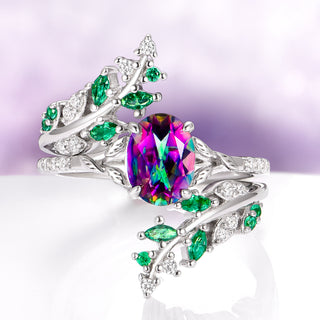
Elegant ring with a colorful gemstone and green gemstones on a light purple background
Fireworks Cut Natural Red Garnet Leaf Engagement Ring in 14K White Gold showcasing a fiery oval red garnet centerpiece surrounded by delicate leaf and vine motifs accented with smaller garnets and sparkling diamonds from Aquamarise Gold.
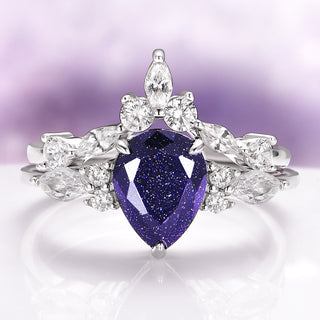
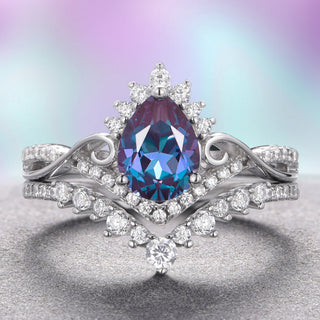
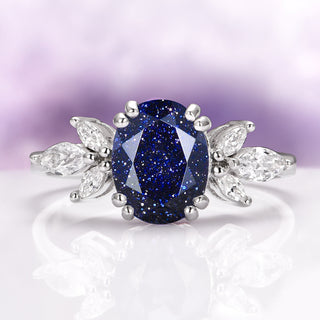
Evelyn Starry Night Engagement Ring Set in 14K White Gold by Aquamarise Gold, featuring a pear-shaped deep blue gemstone and sparkling white diamond accents in a celestial-inspired design.

Evelyn Starry Night Engagement Ring Set in 14K White Gold

from $2,195

Unit price
per 

Moss Agate & Opalescent Sapphire Engagement Ring in 14K White Gold
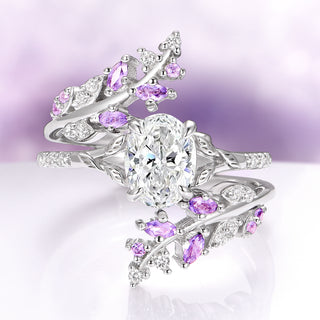
Oval Cut Lab-Grown Diamond & Amethyst Leaf Engagement Ring Set in 14K White Gold (IGI Certified) featuring a detailed nature-inspired band with sparkling lab-grown diamonds and purple amethyst accents, crafted by Aquamarise Gold.
A lab-grown diamond and amethyst ring set in 14K white gold, featuring a teardrop-shaped center diamond surrounded by a halo of round amethyst stones on a textured background.
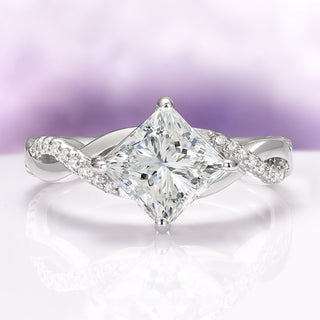
Sophia Lab-Grown Diamond Engagement Ring in 14K White Gold (IGI Certified) featuring a princess-cut diamond with an elegant twisted band accented by sparkling pavé stones by Aquamarise Gold.
Starry Night & Opal Leaf Ring in Sterling Silver
Skye Kite® Alexandrite Engagement Ring Set in 14K White Gold by Aquamarise Gold featuring a kite-shaped alexandrite with diamond accents in a modern, fantasy-inspired design.

Skye Kite® Alexandrite Engagement Ring Set in 14K White Gold

from $2,195

Unit price
per 

A two-piece ring set with a teardrop-shaped alexandrite centerpiece in 14K white gold, accompanied by a band with intricate leaf detailing. The ring is displayed against a gradient purple background.

Faye Alexandrite Engagement Ring Set in 14K White Gold

from $2,135

Unit price
per 

Moss Agate & Emerald Fairy Leaf Couples Ring Set by Aquamarise featuring a nature-inspired sterling silver band with a moss agate center stone, accented with emerald and sparkling clear gemstones, part of Matching Couples’ Rings and May Birthstone Jewelry collections.
Skye Kite® Starry Night Engagement Ring Set in 14K White Gold by Aquamarise Gold, featuring a deep blue kite-cut stone with sparkling diamond accents from the Starry Night™ Rings collection.

Skye Kite® Starry Night Engagement Ring Set in 14K White Gold

from $2,195

Unit price
per 

Sophia Twisted Vine Alexandrite Engagement Ring in 14K White Gold by Aquamarise Gold, featuring a cushion cut alexandrite with an intertwined band accented by sparkling diamonds.
Elegant ring with purple gemstones on a reflective surface

Feyra Starry Night & Amethyst Ring Set in 14K White Gold

from $2,495

Unit price
per 

Moissanite & Crescent Moon Constellation Couples Ring Set featuring a marquise-cut moissanite center flanked by crescent and star accents in polished sterling silver by Aquamarise, part of Matching Couples' Rings and Best Selling Jewelry collections.
Hexagon Coffin Green Moss Agate Couples Ring Set featuring silver bands with green moss agate stones and sparkling accents, from Aquamarise’s Matching Couples' Rings collection.
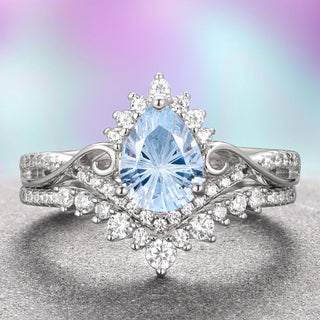
Aquamarine & Moonstone Fairy Leaf Ring Set- Sterling Silver featuring an ice-blue aquamarine center stone with delicate moonstone accents in a nature-inspired sterling silver design by Aquamarise.
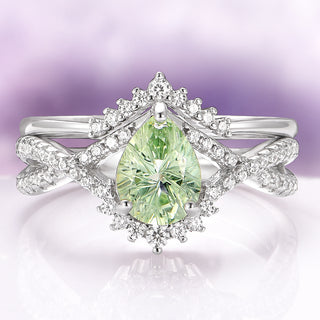
Alice Fireworks Cut Light Green Sapphire Engagement Ring Set in 14K White Gold by Aquamarise Gold featuring a pear-cut light green sapphire surrounded by a sparkling diamond halo on an intricately twisted white gold band, part of Solid Gold Engagement Rings and September Birthstone Jewelry collections.
An elegant two-piece engagement ring set in 14K white gold featuring a teardrop-shaped lab-grown alexandrite centerpiece with accompanying leaf motifs and small accent stones.
Skye Kite® Natural Red Garnet Engagement Ring Set in 14K White Gold by Aquamarise Gold, featuring a kite-shaped red garnet with diamond accents in a modern, elegant design.
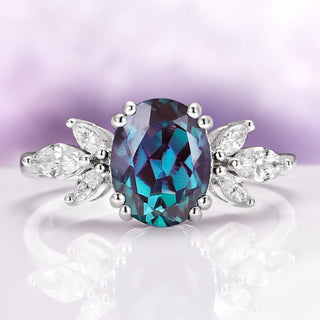
Eva Oval Cut Lab-Grown Alexandrite Ring in Sterling Silver by Aquamarise featuring an oval alexandrite center stone with marquise-cut side stones in a nature-inspired vintage floral design.

Eva Alexandrite Engagement Ring in 14K White Gold

from $2,185

Unit price
per 

Feyra Emerald Tiara Wedding Band- 14K White Gold from Aquamarise Gold features a regal tiara-inspired design with a pear-cut center diamond surrounded by vibrant pear and round emerald accents, crafted in elegant white gold.
Sale

Feyra Lab-Grown Diamond and Emerald Ring Set in 14K White Gold (IGI Certified)

Regular price $3,201.95 from $3,001.95 (-6%)

Unit price
per 

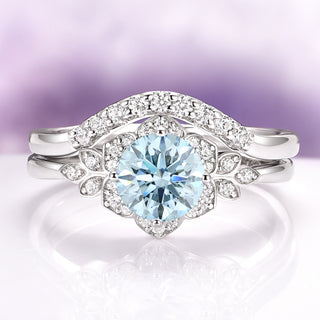
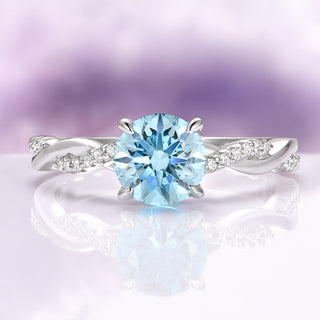
Sophia Twisted Vine Aquamarine Engagement Ring in 14K White Gold featuring a round aquamarine center with twisted vine design and sparkling accents by Aquamarise Gold.

Sophia Twisted Vine Aquamarine Engagement Ring in 14K White Gold

from $2,185

Unit price
per 

Feyra Blue Sapphire Crown Wedding Band in 14K White Gold by Aquamarise Gold features a pear-shaped center diamond accented with brilliant marquise and round blue sapphires set in an elegant, crown-inspired white gold band, part of the September Birthstone Jewelry and Women’s Wedding Bands collections.
Sale

Feyra Moissanite and Blue Sapphire Engagement Ring Set in 14K White Gold

Regular price $2,695 from $2,495 (-7%)

Unit price
per 

Esme Lab-Grown Diamond & Alexandrite Ring- 14K White Gold (IGI Certified) featuring a marquise-cut lab-grown diamond flanked by oval-shaped alexandrite stones with delicate diamond accents on a sculpted white gold band by Aquamarise Gold, part of Solid Gold Engagement Rings, April and June Birthstone Jewelry, and Nature-Inspired Engagement Rings collections.

Platinum jewelry behaves differently from every other white metal, and the difference comes down to one property: platinum does not shed metal when it is scratched. It displaces. A scratch pushes material aside rather than removing it, so a platinum ring keeps essentially all of its mass across a lifetime of wear while softer white metals slowly thin. That single fact drives everything else — why platinum prongs hold stones longer, why platinum never needs replating, and why it weighs what it does.

Why Platinum Jewelry Is Naturally White

White gold is not white. It is yellow gold alloyed with pale metals to neutralize the color, then plated in rhodium to finish the job. The rhodium wears off — usually within a year or two of daily wear — and the ring underneath returns to a warm, faintly grey-yellow tone until it is replated.

Platinum has no such layer. It is naturally white all the way through, so the surface you see on day one is the same material you will see in thirty years. There is nothing to wear off and nothing to reapply. If you have ever been told a white gold ring "needs to be redone," that is the difference in a sentence — and it is the most common reason people move to platinum.

The color difference is subtle in isolation and obvious side by side. Platinum reads as a cool, slightly grey white; freshly rhodium-plated white gold reads brighter and harder, almost blue-white, because rhodium itself is a very reflective metal. Once the rhodium goes, the same ring warms noticeably. If you are matching a new piece to an older white gold one, that drift is the thing to account for. Our guide to yellow, white and rose gold covers how the gold alloys behave by comparison.

Platinum Density, Purity and What It Feels Like

Platinum is dense — around 21.4 g/cm³ against roughly 13 for 14K gold. The same ring in platinum weighs noticeably more, and most people notice it immediately when they try both. Whether that reads as substantial or as heavy is entirely personal, and it is the one thing genuinely worth testing in person rather than deciding on paper.

It is also worn at far higher purity. Platinum jewelry is typically 950 platinum — 95% pure — where 14K gold is 58.5% and stamped 585. That purity is why platinum is so often the right answer for sensitive skin: with almost no alloy content, there is very little nickel or copper to react with.

Purity has a second consequence worth knowing: high-purity platinum is relatively soft in the hand, which is why it takes and holds fine detail well. Milgrain, filigree and engraved work sit crisply in platinum and stay crisp, because the metal moves under a tool without crumbling and does not then wear away.

Platinum14K white gold
ColorNaturally white throughoutAlloyed, then rhodium plated
Typical purity95% (950)58.5% (585)
Density~21.4 g/cm³~13 g/cm³
ScratchesDisplace metalRemove metal
MaintenanceNone requiredPeriodic replating

Why Platinum Rings Hold Stones More Securely

This is the argument jewelers make among themselves, and it is the strongest practical case for the metal. Prongs are the part of any ring that fails, because they are thin and they take constant contact. In gold, every knock and every polish removes a little material, and prongs gradually thin until one bends or breaks.

Platinum prongs move rather than diminish. Metal displaced by a scratch is still there, just relocated, so the prong retains its cross-section far longer. For an important center stone — a large lab-grown diamond, an heirloom, anything irreplaceable — that difference matters more than any aesthetic consideration. If you are choosing a stone first, our loose lab-grown diamonds and loose gemstones are sold unset for exactly that reason.

Choosing between white metals: want a white finish that never needs maintenance, choose platinum. Want the lightest possible feel, choose titanium. Want maximum scratch resistance in a plain band, choose tungsten carbide. Want fine detail and reworkability, choose sterling silver.

The Platinum Patina, and Whether You Want It

Because platinum displaces rather than sheds, an older platinum ring develops a soft satin surface made up of countless tiny displacements. This is called patina, and opinion on it splits cleanly. Some people consider it the point — visible evidence of a life worn rather than a ring kept pristine. Others prefer the original mirror finish.

Either preference is easy to satisfy. A patinated platinum ring can be polished back to high shine by a bench jeweler, and unlike white gold that polish removes almost nothing, because the metal was never lost in the first place. You can move between the two finishes indefinitely without thinning the ring.

Worth noting that patina develops faster on high-polish surfaces than on brushed or matte ones, simply because there is more contrast to lose. If you want a platinum piece that looks consistent for longer without any intervention, choosing a satin or brushed finish from the start does most of that work for you.

Platinum Wedding Bands and Engagement Rings

For a band worn every day without removal, platinum's case is at its strongest: no replating appointments, no color shift, no thinning shank. For a pair of bands it also solves a subtle problem — two platinum rings worn against each other will not wear each other down the way a harder metal wears a softer one.

For engagement rings, the calculation is about the stone rather than the band. Platinum's white tone sits back and lets a colorless stone read whiter, where yellow-toned metal can cast warmth into the stone. See engagement rings for women, men's engagement rings and women's wedding bands, or matching couples' rings if you are buying two.

Caring for Platinum Jewelry

Very little is required. Warm water, mild soap and a soft brush handles ordinary cleaning. Platinum is chemically stable — it does not tarnish, does not oxidize in air, and is unaffected by chlorine, which is one of the few metals that can be said of.

The sensible precautions are about the stones rather than the metal. Remove any ring before heavy manual work, and avoid ultrasonic cleaning on porous or heat-sensitive gems regardless of what they are set in. Platinum itself will tolerate almost anything you do to it.

One genuine caution: platinum's density means a dropped platinum ring hits harder than a gold one. The metal will be fine; a brittle stone in it may not. That is an argument for bezel settings on softer gems and for taking rings off over tiled floors rather than over carpet — the same advice that applies to any ring, just with slightly more force behind it.

Beyond that, platinum is close to maintenance-free. It is one of the few jewelry metals where "do nothing and it will be fine" is accurate advice, and it is the reason platinum pieces so often survive to become the heirloom in a family rather than the piece that was replaced.

Platinum Jewelry FAQs

Is platinum better than gold?

For a white finish, yes on durability and maintenance: platinum is naturally white and never needs replating, where white gold is rhodium-plated and the plating wears off. Gold offers more color choice and a lighter feel. Our comparison at platinum vs gold covers the trade-offs in full.

Does platinum scratch?

Yes, but differently. A scratch in platinum displaces metal rather than removing it, so the material stays on the ring and the piece does not thin over time. Gold loses metal with every scratch and every polish. This is the single most important practical difference between the two.

Does platinum jewelry need replating?

No. Platinum is naturally white throughout, so there is no plated layer to wear off. White gold requires periodic rhodium replating to keep its color, typically every one to two years with daily wear. See yellow vs white vs rose gold.

Why is platinum heavier than gold?

Density. Platinum is around 21.4 g/cm³ against roughly 13 for 14K gold, so an identical ring weighs substantially more in platinum. Most people notice it instantly. Whether it feels substantial or heavy is personal, and worth testing rather than deciding in advance.

Is platinum good for sensitive skin?

Yes — it is usually the best option available. Platinum jewelry is typically 950 platinum, 95% pure, so there is very little alloy content to react with and generally no nickel. For comparison, sterling silver is 92.5% silver with 7.5% copper, and gold alloys vary more widely.

Does platinum tarnish or turn skin green?

No. Platinum is chemically stable — it does not tarnish, does not oxidize in air, and is unaffected by chlorine. Green skin is associated with reactive alloy metals in low-quality or misrepresented pieces, and platinum's high purity leaves almost nothing to react. Compare with men's rings in other metals.

What is platinum patina?

The soft satin surface an older platinum ring develops, made up of many tiny displacements rather than lost metal. Some people prefer it as evidence of wear; others prefer the original shine. A bench jeweler can polish it back at any time without thinning the ring. The same is not true of tungsten, which resists marking but cannot be reworked.

Is platinum better for holding a diamond?

Generally yes. Prongs are where rings fail, and platinum prongs displace metal rather than losing it, so they retain their cross-section far longer than gold prongs. For a significant or irreplaceable center stone that is the strongest argument for the metal. See loose lab-grown diamonds and diamond jewelry.

How pure is platinum jewelry?

Typically 950 platinum — 95% pure — compared with 58.5% for 14K gold, which is stamped 585. That high purity is why platinum is both hypoallergenic in practice and noticeably dense, and why it holds fine detail such as milgrain better than harder alloys. See promise rings for detailed narrow bands.

How should I clean platinum jewelry?

Warm water, mild soap and a soft brush. Platinum tolerates almost anything, so the precautions concern the stones rather than the metal — avoid ultrasonic cleaning on porous or heat-sensitive gems such as turquoise or opal regardless of the setting metal.

Can platinum be combined with other metals in one design?

Yes — mixed-metal designs pairing a white platinum element with a warm gold accent are a long-standing approach and read as deliberate rather than mismatched. Browse rose gold rings, gender neutral rings and meteorite bands for two-tone examples.

Can you make a platinum piece to order?

Yes. Platinum work is made to order rather than held in stock, and runs on its own production timeline — see how long custom jewelry takes and plan backwards from the date you need it. Ready-made alternatives sit in best selling rings.

From the Blog

White Topaz vs Diamond: Sparkle, Durability & Value Compared

White Topaz vs Diamond: Sparkle, Durability & Value Compared

White topaz vs diamond: how they compare on sparkle, hardness, durability, and price, plus how white topaz stacks up against moissanite, white sapphire, and CZ.

Read more
Topaz vs Citrine: How to Tell Them Apart

Topaz vs Citrine: How to Tell Them Apart

Topaz vs citrine: how the two golden November birthstones differ in mineral, hardness, color, price, and meaning, plus five practical ways to tell them apart.

Read more
Citrine Engagement Rings: The Complete Buying Guide

Citrine Engagement Rings: The Complete Buying Guide

Citrine engagement rings explained: whether citrine is durable enough, how to choose color and quality, the best protective settings and metals, styles, price, and care.

Read more
Citrine Meaning: Symbolism, History & Properties

Citrine Meaning: Symbolism, History & Properties

Citrine meaning explained: the merchant's stone symbolism of abundance and joy, its history, colors, believed benefits, natural vs heat-treated citrine, and care.

Read more