


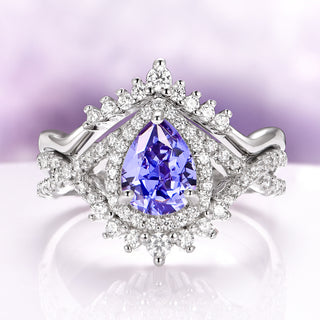
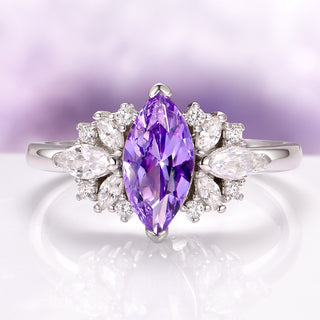

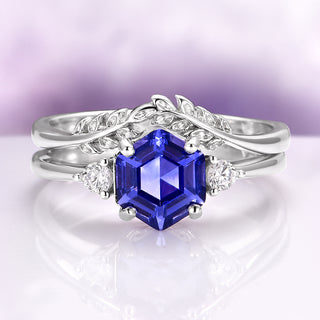
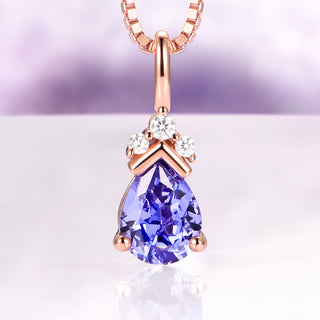




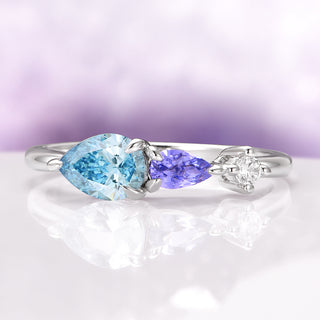
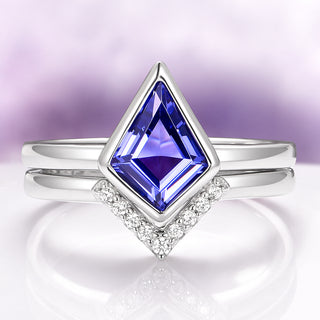

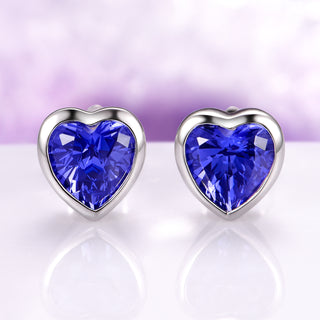
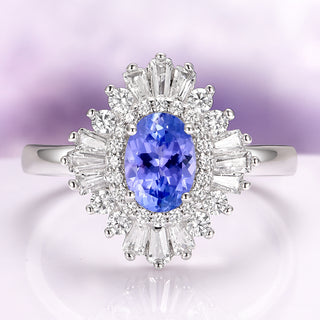
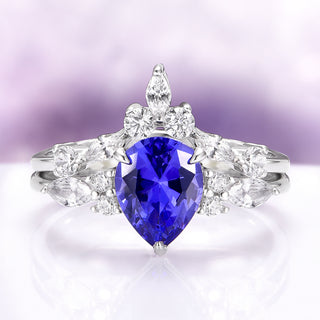


Tanzanite jewelry begins with a fact no other gemstone can match: the world's entire commercial supply comes from a few square kilometers of the Merelani Hills in northern Tanzania, in the shadow of Kilimanjaro. The stone itself — a blue-violet variety of the mineral zoisite, first identified in 1967 — shifts between blue and violet depending on the angle you view it from. This collection is every tanzanite piece we make: earrings, necklaces, pendants, rings, and couples sets, handcrafted in 925 sterling silver, 14K gold vermeil, and solid 14K gold.
Tanzanite Jewelry from a Single Source on Earth
Scarcity is usually a marketing word; here it is geology. One deposit, one hillside, one generation of miners — and widely reported estimates that the accessible supply may be worked out within decades. Diamonds come from four continents; this stone comes from one place, which is why collectors treat it less like a color choice and more like a holding.
Blue by Daylight, Violet by Evening: Pleochroism Explained
Tanzanite is strongly pleochroic — the crystal literally transmits different colors along different axes, so the same stone reads sapphire-blue from one angle and violet from another, and the balance shifts again as lighting moves from daylight to candlelight. No treatment produces this and no cut removes it; the cutter simply chooses which face leads when orienting the rough. It is the closest thing fine jewelry has to a stone with moods — one purchase, several colors, depending entirely on where you are standing when you look at it.
That optical restlessness is why tanzanite earrings are quietly the connoisseur's format: hanging at the jawline, they move constantly, and every turn of the head cycles the blue-to-violet shift that a static setting only hints at. Studs in bezels keep the look minimal; drops maximize the play. If you already own the ring, the earrings are how you finally see what the stone can do.
Teardrop Rings, Solitaires & Aquamarine Pairings
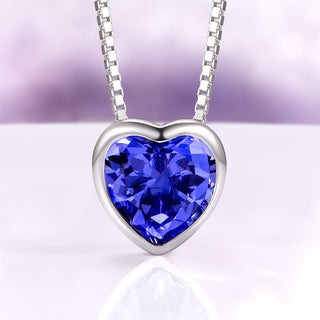
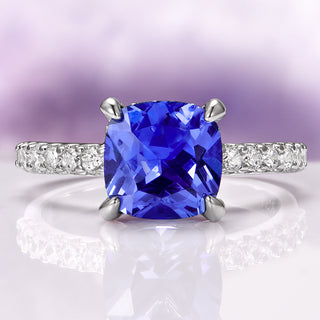
The ring side of the collection runs from a minimalist teardrop tanzanite ring through cushion and oval solitaire designs carrying round cut blue tanzanite up to a full 2ct statement, in settings from plain sterling to yellow gold vermeil. A tanzanite promise ring is a natural first-gift register — the color says considered rather than conventional. And for two-stone romantics there is the tanzanite aquamarine ring: aquamarine and tanzanite share a cool blue register but answer light completely differently, the beryl serene where the zoisite flickers violet. Necklaces follow the same logic — a heart tanzanite necklace in sterling, a minimalist teardrop tanzanite necklace in rose gold vermeil — each one a way of keeping the rarest blue on earth in daily view. Every piece names its stone, its metal, and its dimensions exactly.
Wearing Tanzanite Well: Settings, Care, and Common Sense
Tanzanite measures 6 to 7 on the Mohs scale — a gemstone for occasions and considered wear rather than a stone to forget on your hand through a gym session. The design response is architectural: bezels that wrap the girdle in metal, halos that take the knocks first, and pendant or earring formats where the stone simply lives a gentler life. This is why necklaces and earrings are such a large share of this collection — they are where tanzanite is safest and, thanks to constant movement, most beautiful.
Care is specific but simple: never an ultrasonic cleaner — the vibration is the one genuine hazard to this stone — just lukewarm water, a drop of mild soap, and a soft cloth once a month. Store it apart from harder stones that could scratch it, ideally in its own pouch. Treat it like the rarity it is and a tanzanite piece outlasts its owner gracefully.
Proposing? See the Tanzanite Engagement Rings
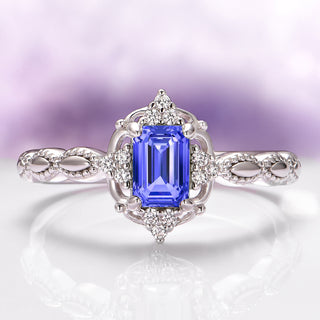
If the question you are shopping for is the big one, the dedicated tanzanite engagement rings collection curates the bridal side — solitaires, halos, hidden halos, vintage and bezel settings built around the blue-violet center. This page is the whole tanzanite wardrobe; that one is the proposal. For neighboring blues in the bridal register, compare sapphire engagement rings — harder stone, steadier color, none of the violet flicker.
Why Collectors Buy Tanzanite from Aquamarise
Every piece is handcrafted and hand-set, shipped worldwide with insured delivery, with complimentary engraving on rings. We hold a 4.9-star average across 38,000+ reviews collected on our store and on Etsy, where we have sold since 2016.
From the Blog

Tanzanite Meaning: Symbolism, History, Healing Lore & Value
The stone of transformation and spiritual awareness. Tanzanite's meaning across symbolism, its remarkable discovery, metaphysical lore, the December birthstone, its color, treatment, value, and how to wear it.

December Birthstones: Turquoise, Zircon & Tanzanite Guide
December has three official birthstones — turquoise, zircon, and tanzanite — plus popular blue topaz. A guide to what each means, how they differ, rarity, and how to choose.

Blue Gemstones: The Complete Guide to Every Shade & Stone
From royal sapphire to sea-blue aquamarine and bright blue topaz — every blue gemstone worth knowing: what makes them blue, what they mean, how hard they are, and the best...

Purple Gemstones: Names, Meanings, Hardness & Value
From everyday amethyst to rare tanzanite — the complete guide to 15 purple gemstones, what they mean, how durable they are, their value, and how to choose one for a...
Tanzanite Jewelry FAQs
“My wife and I love the set. We will be ordering another awesome looking set soon.”
“The ring is absolutely beautiful! So delicate and looks wonderful on my hand!”
“I absolutely love the set. I wear both rings and use the thinner one to stack next to my engagement ring.”
“Stunning ring. I wanted something that tied the design of his engagement ring to his wedding band.”