


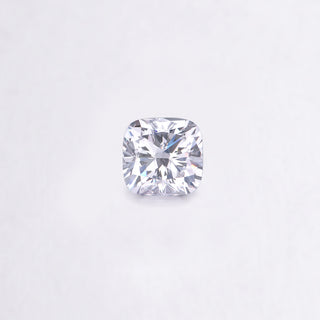


Loose lab-grown diamonds let you fix the two decisions that matter most — the exact stone and the exact cut — before any setting exists. Every diamond on this page is IGI certified and sold unset, spanning round, oval, pear, emerald, asscher, radiant, marquise, and cushion cuts. Each listing states the certificate details and, crucially, the face-up millimeter dimensions beside the carat weight.
Loose Lab-Grown Diamonds, IGI Certified and Unset
Buying the stone first is how bespoke jewelry has always worked at the top end, and certification is what makes it safe to do online. An IGI certificate grades each diamond on the same 4Cs used for mined stones — cut, color, clarity, carat — and records its precise measurements, so the stone you receive is verifiably the stone you chose. From there, the setting becomes a separate, unhurried decision rather than a package deal.

Carat Measures Weight — Millimeters Show Size
The single most useful fact in diamond shopping: carat is a unit of weight, not width. Weight scales with volume — a cubed quantity — while the face-up diameter you actually see scales linearly. Double a round diamond's carat weight and its visible width grows by only about a quarter: a well-cut 1.0 carat round faces up around 6.4mm, while a 2.0 carat is roughly 8.1mm, not 12.8mm. This is why two stones of identical weight can look meaningfully different sizes if one is cut deep and the other spread shallow, and it is why every listing in this collection prints the millimeter dimensions next to the carat weight. Elongated shapes — oval, marquise, pear, emerald — carry their weight across more visible area, so they face up larger per carat than rounds. If maximum spread per dollar is the goal, start with those shapes and compare millimeters, not carats.
Real Diamond Chemistry, Grown Above Ground
A lab-grown diamond is not a diamond alternative — it is a diamond: crystallized carbon at Mohs 10, with hardness, brilliance, fire, and thermal behavior identical to a mined stone, which is why it reads as diamond on a standard tester. The only differences are origin and price. Growers reproduce the heat and pressure of the earth's mantle in weeks rather than eons, and the finished rough is cut and polished by the same hands and standards as mined material — our guide to how lab diamonds are made walks through both growth methods. Graded on the same 4Cs and certified by IGI, a lab-grown stone typically costs a fraction of its mined equivalent, which in practice means a full carat of visible, certified diamond becomes an attainable starting point rather than a stretch goal.

Choosing a Cut for Your Future Setting
Shape drives both the look of the finished ring and the settings available to it. Rounds are the brilliance benchmark and suit every classic solitaire and halo. Ovals, pears, and marquises elongate the finger and face up large for their weight. Emerald and asscher cuts trade sparkle for the glassy hall-of-mirrors effect that rewards high clarity — which lab growth makes far easier to buy. Radiants and cushions split the difference: rectangular outlines with brilliant-style faceting. Because your stone arrives loose with its IGI certificate, any of them can go into a bespoke design through our custom ring page — solitaire, hidden halo, toi-et-moi, or a reproduction of a family setting. Choosing the stone first means the setting is built around real, measured dimensions rather than a catalog average, and the certificate follows the stone for insurance and resale documentation.
From Loose Stone to Finished Ring
Most buyers here follow the same path: choose the certified stone, then either commission a setting through our custom ring service or ask us to set it in a design from our catalog. If you would rather start from a finished design and skip the loose-stone step, our lab-grown diamond engagement rings collection pairs these same IGI-certified stones with ready settings in solid gold.
Lab Diamonds vs Moissanite & Other Sparklers
Moissanite is the honest budget rival — silicon carbide at Mohs 9.25 with more rainbow fire than diamond and a much lower price; browse moissanite engagement rings if fire-per-dollar is the priority. White sapphire and white topaz sit lower still on sparkle. What none of them share is diamond's exact chemistry: only a lab-grown diamond is the same mineral as a mined one, with the same certificate framework behind it.
Every stone ships worldwide with insured delivery and its IGI certificate. We hold a 4.9-star average across 38,000+ reviews collected on our store and on Etsy, where we have sold since 2016.
From the Blog

Lab-Grown Diamonds: The Complete Guide
A complete guide to lab-grown diamonds: are they real diamonds, how they're made, how much they cost, certification, the pros and cons, and whether they're worth buying.

How Are Lab-Grown Diamonds Made? HPHT & CVD Explained
How are lab-grown diamonds made? A clear guide to the HPHT and CVD methods, how a diamond seed grows into a rough crystal, how long it takes, and how it...

IGI vs GIA Certification: Which to Trust in 2026
IGI vs GIA diamond certification explained: what each lab is, how they differ, which grades lab-grown diamonds, whether GIA is stricter, and how to read a report.

Lab-Grown vs Natural Diamonds: The Honest Comparison
Lab-grown vs natural diamonds: an honest comparison of what's identical and what's different — price, resale value, rarity, ethics — to help you choose the right diamond.
Loose Lab-Grown Diamonds FAQs
“This ring exceeded my expectations in every way. The craftsmanship is impressive, with a more substantial feel than I anticipated from the photos.”
“Absolutely perfect! This engagement ring is even more beautiful in person than in the pictures.”
“Can't even put into words how beautiful this ring is! And the engraving my husband put in it makes it all the more unique!”
“I absolutely love this set! Ring has great sparkle to it.”