


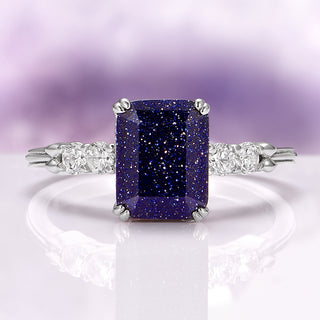


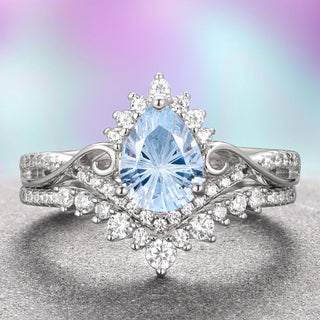
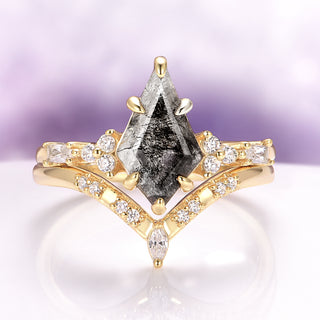
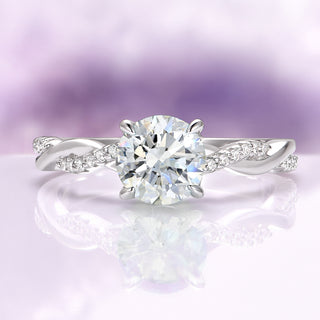
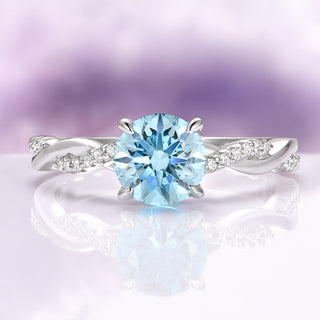
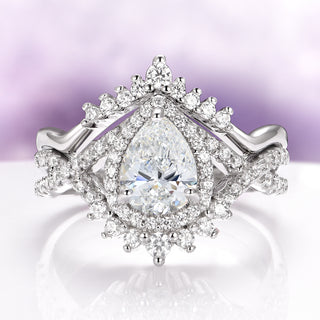


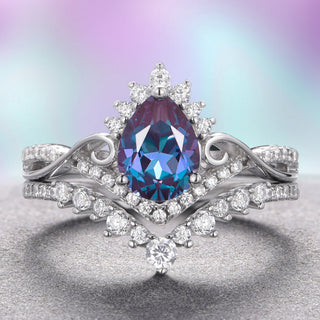
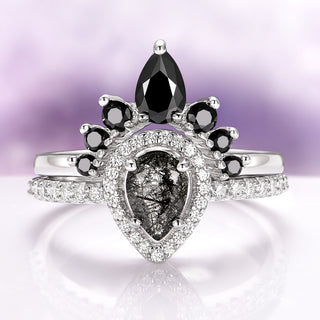


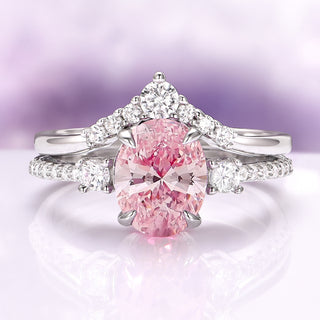

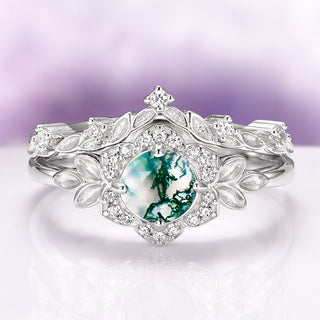
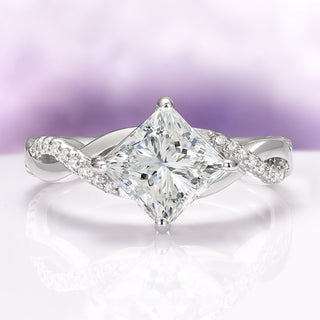
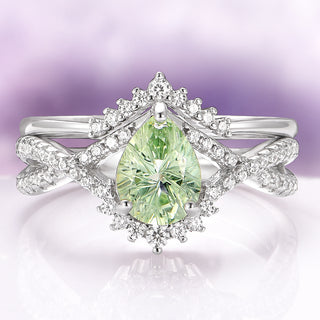

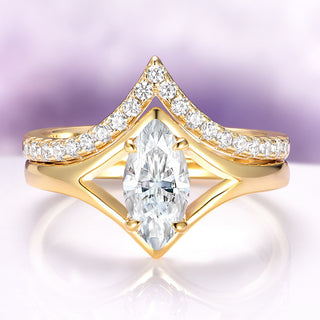


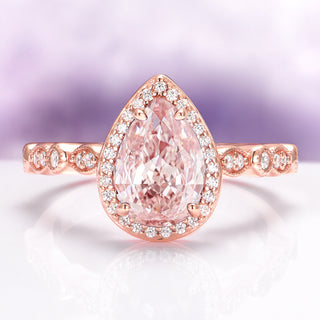

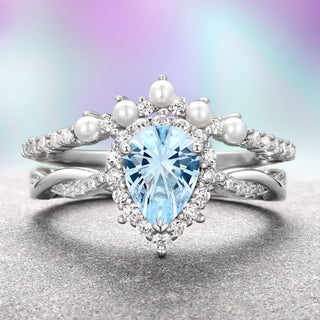

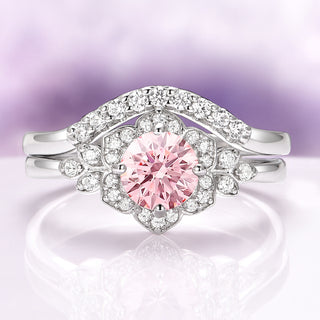
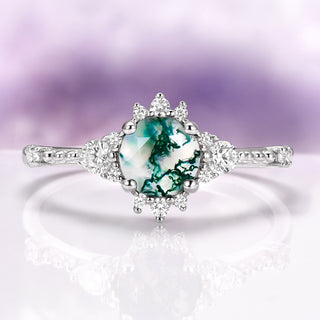

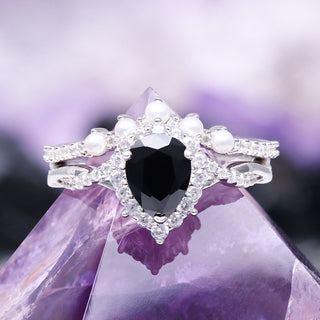
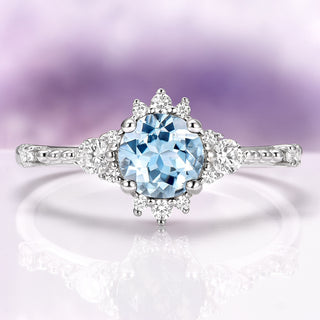


Pavé means “paved” — and that is exactly what the jeweler does, setting tiny stones edge to edge along the band until the metal surface reads as a road of continuous light. The technique is older than the word’s fashion moment: Georgian and Victorian workshops paved mourning rings and cluster work, and the modern micro-pavé band is simply that craft under a loupe. In this collection the paving runs beneath centers of aquamarine, moissanite, morganite, alexandrite, and IGI-certified lab-grown diamond, hand-finished in 925 sterling silver with a rhodium finish, 14K gold vermeil, and solid 14K gold.
A Band Paved with Light
What the paving changes is where the sparkle lives. A plain shank leaves the performance to the center stone; a paved one glitters through every gesture — typing, pouring, waving — so the ring is animated from every angle, not just from above. It is the difference between a spotlight and a lit runway, and it is why the style dominates modern bridal design; our guide to setting types shows the whole family side by side.

Pavé vs Micro-Pavé vs French: the Fine Differences
All paving shares one mechanic — small stones held by tiny beads of metal raised from the band itself — and the variants are a matter of scale and cutting. Classic pavé uses stones around a millimeter or more, visible individually up close. Micro-pavé shrinks them below that, set under magnification so densely the beads all but vanish; the band reads as unbroken glitter.
French pavé cuts small V-shaped channels beneath each stone so light enters from the sides, trading a little security for extra brilliance. Petite pavé simply narrows the paved lane to keep a delicate band delicate. In every version the metal does quiet work: rhodium-finished sterling and white gold disappear behind white stones, while yellow and rose settings warm the lane into a golden seam. Each listing names its paving style plainly, so you always know which craft you are buying.
Pavé Gemstone Engagement Rings — Aquamarine to Lab Diamond
Paving is stone-agnostic, and this collection proves it. The aquamarine pave ring is the house signature — an icy blue center riding a white-paved band — and every pave gemstone engagement ring here follows the same logic: let the band supply the glitter and the center supply the character. Moissanite centers turn the whole ring incandescent; blush morganite and color-shifting alexandrite play the paving as contrast; IGI-certified lab-grown diamond keeps the look classic with modern provenance — our lab-grown diamond guide explains the certification.
Metals run three honest tiers: 925 sterling silver — 92.5% solid alloy under a rhodium finish — 14K gold vermeil at the FTC’s 2.5-micron standard, and solid 14K gold stamped 585.

Comfort, Care & Honest Everyday Wear
Paved bands deserve straight talk. The stones sit in the band’s upper surface, so a well-made pavé ring feels smooth to the wearer — the beads face outward, not inward — and ours are finished so the paved lane never rubs the adjacent finger. Two habits keep one perfect: a monthly soak-and-brush with mild soap, because paved lanes collect lotion faster than plain metal, and a yearly once-over to confirm every small stone still sits tight.
Two honest cautions: full-eternity paving leaves a jeweler little room to work on the band later, which is why our paving usually stops before the underside — comfort, and future-proofing, by design. And paved rings prefer to come off for heavy gym work; grit ground into the lane is their one enemy. Our guide to cleaning jewelry at home covers the five-minute routine that keeps the lane bright.
Pavé vs Solitaire vs Halo: Where Should the Sparkle Live?
Three settings, three addresses for the light. A solitaire concentrates everything in the center stone and leaves the band silent. A halo rings the center with accents to make it read larger. Paving sends the accents down the band instead, animating the whole hand without inflating the center — and the styles combine happily: many designs here pair a paved shank with a framed or three-stone top, taking both addresses at once.
Pairing a Pavé Ring with the Right Band
A paved engagement ring already glitters at band level, so the wedding band beside it can either match the lane — a second paved line doubles the runway — or calm it with plain polished metal. Where a larger center sits low, the arc of curved wedding bands nests around it without a gap; the full straight-band wardrobe lives in women’s wedding bands.
Every Aquamarise ring is hand-finished and ships worldwide with insured delivery, complimentary engraving, and a 14-day return window on non-customized pieces. We hold a 4.9-star average across 38,000+ reviews collected on our store and on Etsy, where we have sold since 2016.
From the Blog

Engagement Ring Styles & Setting Types: The Complete Guide
The complete expert guide to engagement ring styles and setting types: solitaire, halo, three-stone and more, plus prong, bezel, pavé and channel settings, and how to choose.

Lab-Grown Diamonds: The Complete Guide
A complete guide to lab-grown diamonds: are they real diamonds, how they're made, how much they cost, certification, the pros and cons, and whether they're worth buying.

How to Care for Your Engagement Ring: When to Take It Off & Maintenance Tips
Your love is bulletproof — your ring is not. A complete guide to when to remove it, how to clean every metal safely, gemstone-specific care for moss agate, opal, moissanite...

How to Clean Jewelry at Home: Safe Methods for Every Metal & Gemstone
Almost every piece can be cleaned at home — but the method has to match the material. A jeweler's guide to the universal soap-and-water method, metal-by-metal and gem-by-gem instructions, ultrasonic...
Pavé Engagement Rings FAQs
“This ring completely exceeds my expectations and it is absolutely gorgeous! I chose alexandrite for the meaning behind the stone: balance, transformation, joy, and good fortune.”
“This ring is stunning! It's a perfect fit and so comfortable. The pictures don't do it justice.”
“My ring is so precious, shiny, delicate and beautiful.”
“This ring is absolutely beautiful and very well made. I love it so much.”