


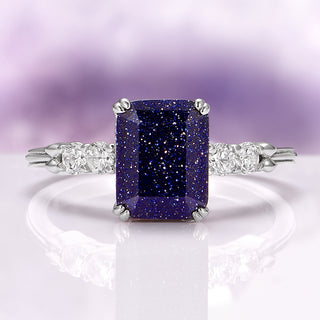


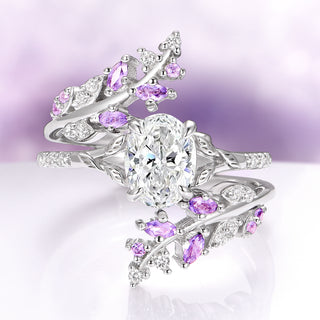


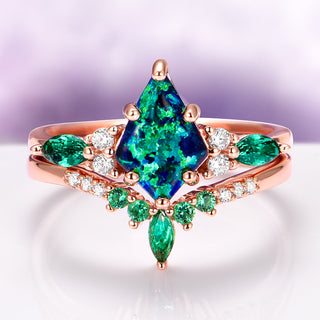


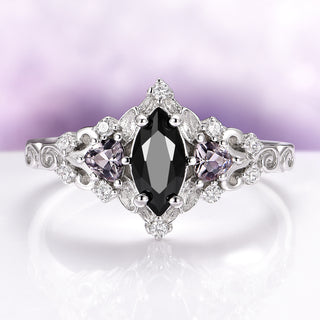
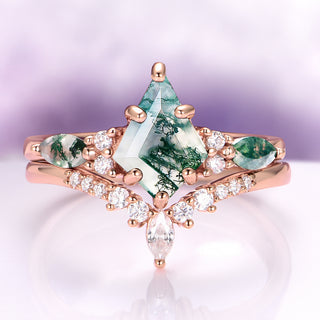


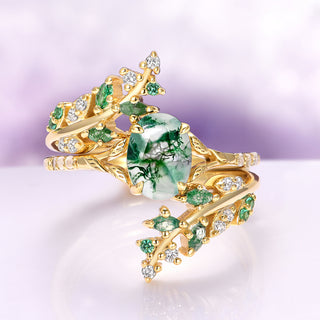

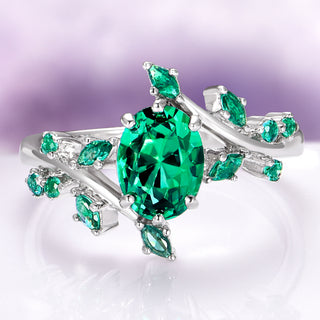


A gemstone engagement ring is a deliberate choice: a color chosen over a carat weight, a stone that says something specific about two people instead of reproducing the showcase default. This collection is the full Aquamarise® range of colored stone engagement rings — every hue, cut and setting style in one place, handcrafted around ethically sourced stones in genuine 925 sterling silver (a 92.5% solid silver alloy), 14K gold vermeil and made-to-order solid gold and platinum.
Why a Colored Center Stone Is a Deliberate Choice
Three structural reasons keep pulling buyers away from the colorless default. Color carries personality: a diamond is neutral by design, while a moss agate looks like a forest sealed in stone and an alexandrite changes with the light. Distinctiveness is built in: at any given showcase, in rings hold a colorless center stone, so a colored one is recognizably yours at a glance. And the pricing is honest — colored stones are priced on rarity and beauty rather than on a century of diamond marketing, so comparable craftsmanship costs a fraction of the diamond equivalent.

What Changes When Color Is the Point
A colored center stone does more than tint the ring — it changes how the ring behaves. Saturated stones like sapphire and garnet hold their color steadily in any light, so the ring reads the same at a desk and at dinner. Optical stones perform: alexandrite swings from teal toward purple-red as lighting warms, moonstone rolls a blue flash across its dome, and blue sandstone scatters copper sparks like a night sky. Pattern stones — moss agate above all — make the inclusion the artwork, so the ring becomes literally unrepeatable.
That range is why choosing by feeling works better than comparing stones one at a time. Decide whether you want steady color, changing color, or a one-off pattern, and the field narrows to two or three stones immediately. Our guide to blue gemstones shows how much the answer varies within even a single color family.
Eight Stone Lanes, from Moss Agate to Opal
Each major stone has its own dedicated collection with deeper detail, stone-specific FAQs and the full product range — this page is the hub that hands you down to the right one. Moss agate engagement rings lead the nature-inspired lane with green dendritic landscapes no two of which repeat. Aquamarine engagement rings carry cool, icy blue in one of the most durable beryls. Sapphire engagement rings are the classic colored choice — saturated blue, teal, pink or white at 9 on the Mohs scale. Moissanite engagement rings bring near-diamond hardness with more fire, at a far lower price.
Alexandrite engagement rings hold the color-change lane — teal by day, purple-red by lamplight. Emerald engagement rings answer the call for deep, storied green. Morganite engagement rings supply the warm blush-pink that flatters most skin tones. And opal engagement rings close the set with play-of-color that never sits still. If you already know your stone, go straight down a lane; if not, the sections above and below will get you there by feel or by durability.

Hardness, Wear and the Honest Trade-Offs
If the ring will face heavy daily wear, durability deserves equal billing with beauty. The Mohs scale measures scratch resistance, with diamond at 10 as the reference. Moissanite at 9.25 and sapphire at 9 are the set-and-forget choices — rings you never think about at the gym or the sink. Alexandrite at 8.5 is nearly as tough. Aquamarine and morganite at 7.5–8 hold up well over decades of ordinary wear. Emerald shares that hardness but carries natural internal gardens, so it prefers a protective setting and a mindful owner.
Moss agate at 6.5–7 is durable enough for daily wear in the bezel and cradle settings we design it into, and opal at 5.5–6.5 is best treated as an occasion stone or worn with care. None of this is disqualifying — it simply decides the setting. Our guide to setting types shows how bezels, halos and cradles protect softer stones.
Gemstone, Colored Stone or Unique: Which Page You Want
“Gemstone engagement rings” and “colored stone engagement rings” name the same category, and this page covers both. If what draws you is one-of-a-kind character more than color itself — unusual cuts, gothic and celestial settings, stones prized for pattern — our unique engagement rings collection is built around exactly that. And if you would rather choose the stone before any setting exists, the loose gemstones collection sells stones unset, so the ring is designed around the stone rather than the other way round.
From This Hub to a Finished Ring
Pick a stone lane above and its collection hands you the deeper detail. When no listed combination is quite right, the custom ring builder will set any stone in our library in the metal you choose. We hold a 4.9-star average across 38,000+ reviews collected on our store and on Etsy, where we have sold since 2016.
From the Blog

Emerald Engagement Rings: The Complete 2026 Buying Guide
Emerald is a bold, romantic engagement stone — vivid green, rich in meaning, but softer than sapphire. Our 2026 guide covers color and the jardin, durability, the emerald cut, protective...

Blue Gemstones: The Complete Guide to Every Shade & Stone
From royal sapphire to sea-blue aquamarine and bright blue topaz — every blue gemstone worth knowing: what makes them blue, what they mean, how hard they are, and the best...

Morganite vs Diamond Engagement Ring - An Honest Comparison
Morganite vs diamond engagement rings compared: color, sparkle, durability, price, and when a blush-pink morganite ring makes more sense than a diamond.

Engagement Ring Styles & Setting Types: The Complete Guide
The complete expert guide to engagement ring styles and setting types: solitaire, halo, three-stone and more, plus prong, bezel, pavé and channel settings, and how to choose.
Gemstone Engagement Rings FAQs
“I absolutely love this set! Ring has great sparkle to it.”
“It's a gorgeous ring with the most beautiful stone and detail.”
“The ring is beautiful and I love that I was able to have it engraved.”
“We absolutely love our ring sets. They fit perfectly and look even better than the pictures.”