


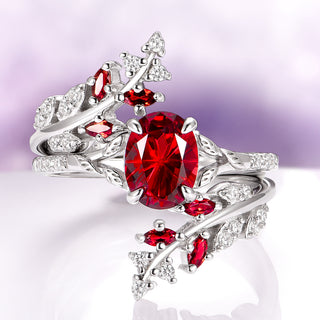

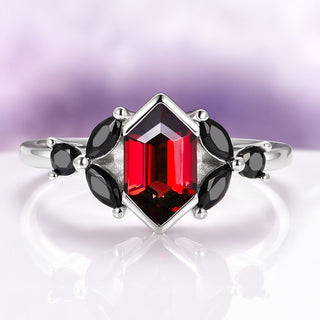


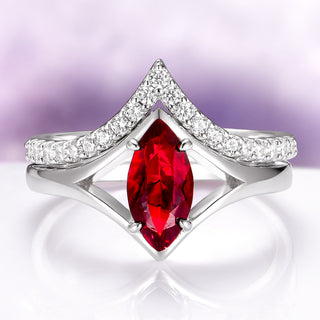

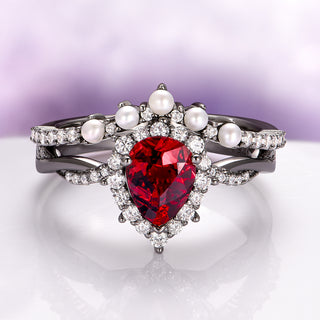


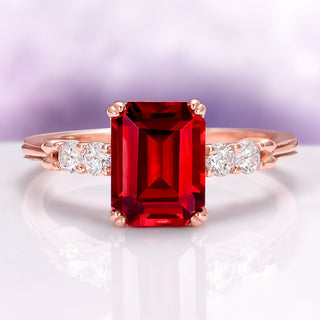

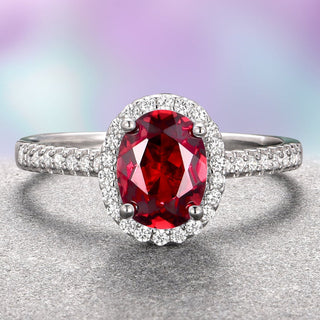

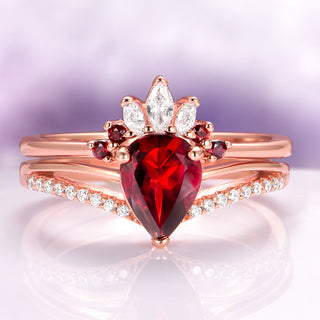


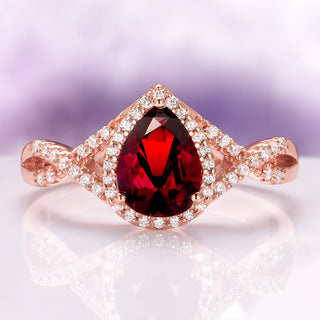
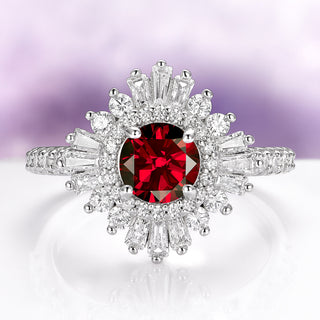


A garnet engagement ring proposes in the color of devotion — the deep wine red worn in Roman betrothal rings, medieval European tokens of constancy, and the sentimental jewelry of the Victorian era. Few stones arrive with this much documented history, and fewer still make it this attainable: every design here is handcrafted in 925 sterling silver, 14K gold vermeil, or solid 14K gold.
Why Garnet Belongs on an Engagement Ring: A Five-Thousand-Year Betrothal Stone
Garnet is not one mineral but a family — almandine, pyrope, spessartine, tsavorite, demantoid, and more — and the classic wine-red stones in this collection are almandine-pyrope blends measuring 6.5–7.5 on the Mohs scale. That places garnet comfortably in daily-wear territory with mindful care: harder than opal or moonstone, and untroubled by decades of ordinary days when treated with basic respect. The red runs darker than ruby's — closer to claret than to fire — which is why garnet reads as romantic rather than loud, and why it has never needed a trend to stay in style.

Garnet Engagement Ring Settings That Protect the Stone
At Mohs 6.5–7.5, garnet is suited to daily wear with mindful care — and the setting does most of that minding. A bezel wraps the stone's girdle in a slim collar of metal, the most secure architecture for hands that type, travel, and garden. A halo rings the center in pale accents that shield its edges while making the red read larger and brighter against the white. Vintage profiles — milgrain borders, cathedral shoulders, openwork galleries — echo the eras when garnet was Europe's betrothal stone of choice, and our antique & vintage engagement rings continue those lines across other stones.
Solitaires remain the honest default: a single garnet, a handful of prongs, nothing to distract from the color. Whichever architecture you choose, the stone is set by hand and inspected before it ships, so the prongs sit tight against the pavilion from the first day — the difference between a setting that merely holds a gem and one built around it.
Red Garnet Rings, from Wine-Dark Solitaires to Black-and-Red Pairings
The range runs far wider than the classic solitaire. Ovals and cushions spread garnet's color across the finger; marquise and pear cuts stretch it into points; kite and coffin silhouettes lean gothic. Black and red gemstones make one of alternative bridal's most striking combinations — deep garnet beside black onyx or black diamond accents, or set against a black ruthenium finish — and those are the engagement rings garnet devotees ask us for most. For something quietly personal, a garnet and aquamarine ring joins the wine-dark center to the icy blue our studio is named for.
If red is settled but the stone is not, weigh garnet against its harder cousin in our honest garnet vs ruby comparison, or browse ruby engagement rings side by side. The choice usually comes down to budget and hue: ruby costs several times more at comparable color, while garnet gives you the darker, moodier red.

Metals for a Garnet Engagement Ring: Sterling, Vermeil & Solid 14K Gold
Every metal tier here is exactly what it says. 925 sterling silver is a solid alloy — 92.5% pure silver through and through, finished with rhodium for a cool white surface that flatters garnet's depth. 14K gold vermeil meets the FTC's definition of true vermeil: a layer of gold at least 2.5 microns thick over that same solid sterling base, giving the warmth of gold at an accessible price. And solid 14K gold — 58.5% pure gold, stamped 585 — is the heirloom tier, offered in yellow, rose, and white. Yellow gold is the most historically resonant pairing, the metal garnet wore through Roman and Victorian jewelry alike; rose gold reads softer and more contemporary; white metals step back and let the red carry the whole composition. Compare the same silhouettes across sterling silver engagement rings and solid gold engagement rings before deciding where the budget truly belongs — the stone stays the same; only the frame changes.
Garnet Engagement Rings vs the Wider Garnet Jewelry Collection
This page is the bridal lane: proposal-ready settings built around a natural red garnet center. For pendants, earrings, and everyday red-garnet pieces, step over to our garnet jewelry collection; matching and stacking bands live in garnet wedding bands, and his-and-hers designs in matching couples' rings. Exploring beyond red altogether? Morganite and moss agate engagement rings are the two collections our garnet buyers cross-shop most.
A Garnet Engagement Ring Handcrafted for the Next Hundred Years
Every ring is handcrafted and hand-finished with ethically sourced stones, then shipped worldwide with insurance and a 14-day return window on non-customized pieces. We hold a 4.9-star average across 38,000+ reviews collected on our store and on Etsy, where we have sold since 2016. Prices run from accessible to heirloom — and if the right ring isn't on this page, design your own custom ring or add hand engraving to make one yours alone.
From the Blog

Garnet vs Ruby: An Honest Comparison for Engagement Rings
Two red gems, two different minerals, one big price gap. Hardness, color, value, durability, and how to tell garnet from ruby — the honest comparison.

Red Engagement Rings: Every Red Gemstone Compared
Ruby, garnet, red spinel, rubellite, red diamond and more — compared by durability, meaning, and value, so you can choose the perfect red stone for your engagement ring.

Garnet Meaning: Symbolism, History, Healing Lore & Value
The stone of love, passion, and protection. Garnet's meaning across symbolism, history and mythology, metaphysical lore, the January birthstone, its colors, value, and how to wear it.

How to Build a Custom Engagement Ring: A Step-by-Step Guide
A jeweler's step-by-step guide to designing a custom engagement ring — from budget and center stone to setting, metal, CAD approval, timeline, and what a custom ring really costs.
Garnet Engagement Rings FAQs
“Absolutely stunning. Beautiful coffin cut garnet. The set is perfect for my fiancé and me.”
“Beautiful dark garnet, the ring I received looks exactly like the picture.”
“Looks just like it does in the picture. Beautiful piece.”
“This ring exceeded my expectations in every way. The craftsmanship is impressive, with a more substantial feel than I anticipated from the photos.”