


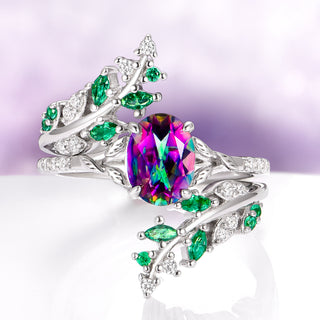
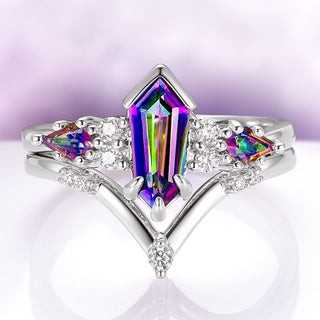


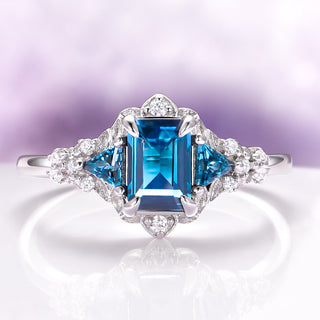


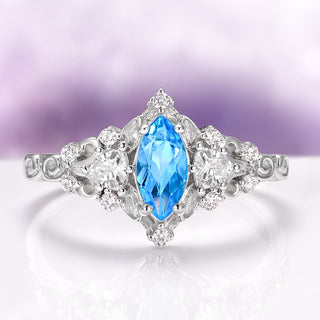

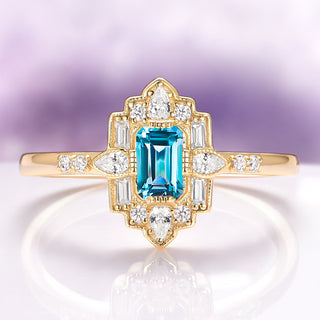

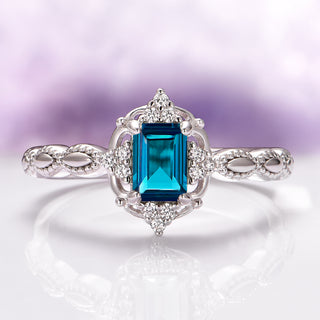


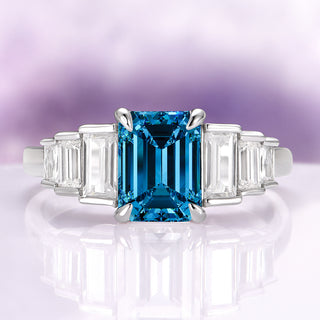
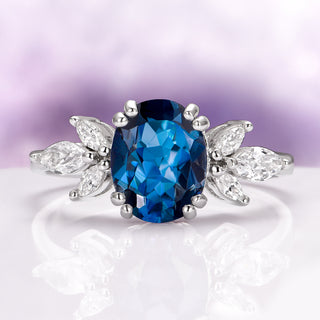

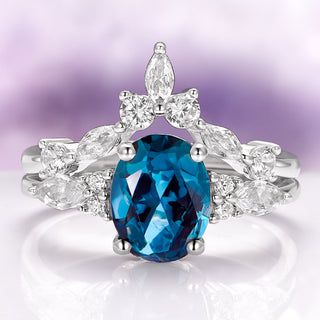


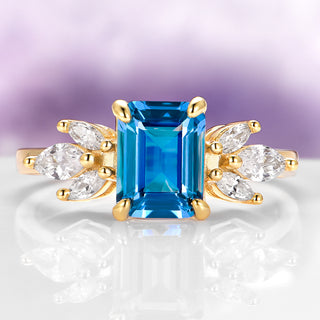
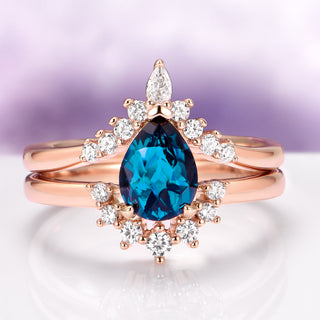


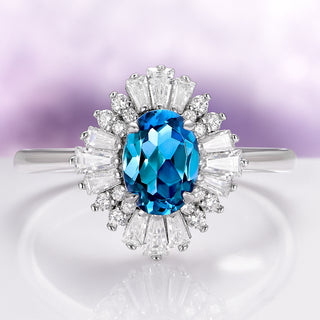

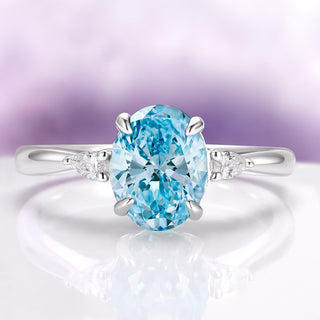
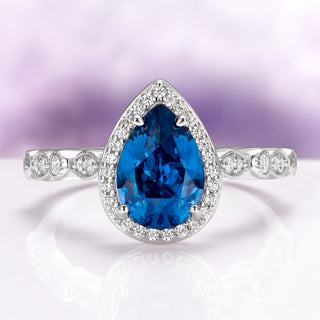


A topaz engagement ring puts a Mohs 8 stone at the center — hard enough for daily wear, and available in a color range no other single engagement gemstone offers. This collection holds designs in 925 sterling silver, 14K gold vermeil, and solid 14K white, yellow, and rose gold, in white topaz, sky blue, Swiss blue, and London blue. For topaz beyond bridal — earrings, necklaces, and everyday rings — see the wider topaz collection.
Why Topaz Works as an Engagement Stone
Three reasons topaz has become an increasingly chosen engagement stone, beyond simple color preference.
Genuine engagement-grade hardness. Topaz ranks 8 on the Mohs hardness scale — measurably harder than amethyst (7), tanzanite (6–7), morganite (7.5–8), and aquamarine (7.5–8). Topaz handles daily wear with the same practical durability as emerald (Mohs 7.5–8) and approaches sapphire territory (Mohs 9). The stone has perfect basal cleavage, which means it requires reasonable impact awareness — but in protective settings with normal wear precautions, topaz engagement rings hold up across decades essentially indefinitely. For buyers wanting genuine colored stone variety without compromising on durability, topaz is the most practically wearable option in its color range.
Exceptional color variety within a single stone family. Most engagement gemstones come in essentially one color — sapphire is blue (with rare exceptions), emerald is green, ruby is red, aquamarine is light blue. Topaz is one of the few gemstones available in genuinely distinct color variants suited to engagement use:
- White topaz — colorless, clear, often used as a budget-friendly diamond alternative with comparable visual presentation
- Sky blue topaz — light, bright, airy blue similar to aquamarine but typically more saturated
- Swiss blue topaz — medium-deep electric blue, the most popular blue topaz variant for engagement use
- London blue topaz — deep saturated greenish-blue, the most distinctive and statement-piece-worthy variant
- Imperial topaz — warm yellow-orange, less commonly used in engagement contexts but available for specific aesthetic preferences
This variety lets buyers match topaz to specific aesthetic and color preferences without leaving the stone family — a level of flexibility most other colored gemstones don't offer.
Outstanding price-to-presence ratio. Topaz delivers visible carat presence at a fraction of comparable sapphire pricing. A 2-carat London blue topaz typically costs significantly less than a 2-carat sapphire of equivalent color saturation, and the price difference often allows buyers to choose larger sizes than they would otherwise consider. For couples wanting saturated blue color in an engagement ring at engagement-appropriate sizing, topaz is the most accessible option among genuine precious-grade stones.
Topaz Color Variants for Engagement Rings
The topaz color you choose materially affects the ring's overall character. Each variant occupies a different aesthetic register.
White Topaz Engagement Rings
White topaz is colorless, clear, and bright — the closest visual approximation to diamond available in the natural topaz family. White topaz engagement rings work as a budget-friendly diamond alternative, offering similar bright sparkle and visual presentation at substantially lower cost. The stone reads as traditional and bridal in a way colored topaz variants don't, which makes white topaz the choice for buyers who want a colorless engagement ring with genuine precious-stone material rather than a synthetic alternative.
White topaz typically uses brilliant cuts (round, oval, cushion, pear) to maximize light return and produce diamond-like sparkle. The stone is somewhat softer than diamond (Mohs 8 vs 10), which means it benefits from protective settings for active wearers. Otherwise, white topaz handles daily engagement-ring wear well.
Sky Blue Topaz Engagement Rings
Sky blue topaz is the lightest blue variant — a soft, airy pale blue similar to aquamarine but typically with more saturation. Sky blue topaz engagement rings produce a delicate, romantic register that suits pastel and vintage-inspired aesthetic preferences particularly well. The light blue reads as gentle rather than statement, making sky blue topaz a frequent choice for buyers who want subtle color rather than dramatic color.
Swiss Blue Topaz Engagement Rings
Swiss blue topaz is the medium-deep blue variant — bright, electric, and saturated without being dark. Swiss blue topaz engagement rings produce the most vibrant blue presentation available in the topaz family, comparable to a brighter version of cornflower-blue sapphire at a fraction of the cost. The stone reads as confident and saturated, suited to buyers who want clear visible blue color without the deeper undertone of London blue.
Swiss blue is the most popular blue topaz variant for engagement rings because it occupies the middle ground between sky blue's softness and London blue's depth, suiting the broadest range of buyers.
London Blue Topaz Engagement Rings
London blue topaz is the deepest blue variant — a saturated greenish-blue with exceptional color depth and visual weight. London blue topaz engagement rings produce the most distinctive and statement-worthy presentation available in the topaz family, with color depth that approaches deep sapphire territory while costing substantially less. The stone reads as serious, considered, and aesthetically distinctive, suited to buyers who specifically want deep blue color presentation rather than lighter alternatives.
London blue topaz pairs particularly well with white gold and platinum-toned settings that preserve color saturation, and with vintage-inspired settings where the deep blue references the Victorian and Art Deco prevalence of saturated jewel-tone colored stones.
Topaz Engagement Ring Styles
Topaz Solitaire Engagement Ring
The simplest configuration: a single topaz center stone in a clean band, no accent stones. Solitaire settings work particularly well with topaz because the stone's saturated color (in blue and imperial variants) or bright clarity (in white topaz) carries the entire ring visually. Most topaz solitaires use four-prong or six-prong settings that maximize the visible stone surface.
For broader solitaire engagement options, see solitaire engagement rings.
Topaz Halo Engagement Ring
A halo setting surrounds the topaz center stone with smaller accent stones — typically lab-grown diamonds, moissanite, or coordinated colored gemstones. The halo amplifies the visible scale of the ring and creates dramatic contrast where bright accent stones surround a saturated colored center. For blue topaz variants specifically, the bright white halo intensifies the blue's perceived saturation; for white topaz, the halo creates additional sparkle that builds on the center stone's brilliance.
For broader halo options, see halo engagement rings.
Topaz Hidden Halo Engagement Ring
A hidden halo places small accent stones beneath the topaz's girdle, visible only when the ring is viewed from the side. From directly above, the ring reads as a clean topaz solitaire. As the wearer's hand moves, hidden accents catch light from new angles and produce intermittent flashes that complement the topaz's color presentation.
See the broader hidden halo engagement rings collection.
Topaz Three-Stone Engagement Ring
Three-stone settings flank the topaz center with smaller accent stones, traditionally interpreted as past, present, and future. Two patterns work well for topaz specifically: matching smaller topaz side stones in the same color variant (creates color continuity) or contrasting white accent stones in moissanite or lab-grown diamond (plays the saturated color against neutral brilliance).
Bezel-Set Topaz Engagement Ring
A bezel setting wraps a thin metal band around the entire stone perimeter, securing it without prongs. For topaz engagement rings, bezel settings provide additional protection at the stone's edges (where topaz's perfect basal cleavage makes it most vulnerable to chipping under direct impact) and produce a sleek modern aesthetic that contrasts with topaz's traditionally vintage character.
Browse the broader bezel set engagement rings collection.
Vintage and Art Deco Topaz Engagement Rings
Topaz has one of the longer historical associations with vintage and Art Deco fine jewelry of any colored gemstone — blue topaz and white topaz appeared prominently in Victorian, Edwardian, and 1920s-1940s Art Deco jewelry, meaning topaz engagement rings in vintage-inspired settings carry authentic period referencing rather than recreated aesthetics. Milgrain detailing, symmetrical accent stones, geometric metalwork, and Edwardian-style scroll engraving all suit topaz particularly well.
For broader vintage options, see vintage antique engagement rings.
Nature-Inspired and Fairy Topaz Engagement Rings
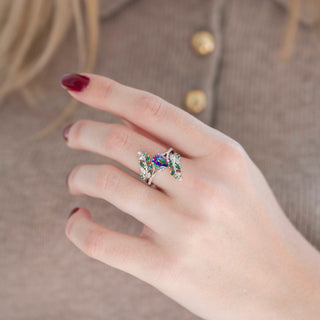
Topaz's color range — particularly the blue variants — pairs well with leaf, vine, and floral setting motifs because blue sits naturally within the floral palette (forget-me-not, hydrangea, iris). Topaz nature-inspired settings produce a distinctive aesthetic combining natural color with organic form.
For nature-inspired and fairy settings, see nature-inspired engagement rings, fairy engagement rings, floral engagement rings, and leaf engagement rings.

Metal Options for Topaz Engagement Rings
Sterling Silver Topaz Engagement Rings
925 sterling silver is the most accessible metal in this collection — genuine precious metal, fully repairable. Silver's cool tone preserves topaz's color saturation across all variants, and reads as historically authentic for blue topaz given the cool-metal tradition for blue gemstones in Western fine jewelry.
For the broader silver engagement range, see sterling silver engagement rings.
Gold Vermeil Topaz Engagement Rings
Gold vermeil — sterling silver with a thick gold layer meeting US FTC standards — delivers gold aesthetics at accessible pricing.
Yellow gold vermeil creates striking warm-cool contrast against blue topaz variants and amplifies the warmth of imperial topaz. Rose gold vermeil softens topaz's color presentation into a more romantic register. White gold vermeil preserves blue topaz at full saturation similar to silver, with slight warmth from the gold layer.
See the broader gold vermeil jewelry, yellow gold vermeil jewelry, and rose gold vermeil rings collections.
Solid 14K Gold Topaz Engagement Rings
The premium tier within the collection: solid 14K gold throughout the entire ring — gold alloy, not a surface layer. Available in white, yellow, and rose gold. White gold and platinum-toned settings are the most traditional pairing for blue topaz, preserving the color at full saturation. Heirloom-grade. Holds material value across decades.
For the broader solid gold engagement range, see solid gold engagement rings.
Black Ruthenium Topaz Engagement Rings
For alternative or gothic aesthetics, black ruthenium finish over sterling silver creates dramatic contrast that makes topaz's color (particularly blue variants) read more saturated against the dark metal. The combination produces a distinctive aesthetic register suited to gothic and dark-romantic engagement design.
See lovers of the dark™ black engagement rings and gothic engagement rings.
Matching Wedding Bands for Topaz Engagement Rings
Topaz engagement rings pair particularly well with three wedding band styles:
Plain solid gold or silver band — the simplest pairing, lets the topaz remain the visual focus. Works particularly well with topaz solitaires.
Diamond or moissanite eternity band — small accent stones in a continuous band, providing brilliant white contrast against topaz center stones (particularly effective with blue topaz variants).
Coordinated topaz-accent band — a wedding band with smaller topaz accent stones echoing the engagement ring's center color. Particularly striking when paired with topaz halo or three-stone engagement settings.
For matching bands, see solid gold wedding bands, sterling silver women's wedding bands, and curved wedding bands. For coordinated engagement-and-wedding sets, see couples engagement ring sets, couples wedding ring sets, and the matching couples rings guide. For coordinated topaz pairings between partners, see topaz couples rings.
We hold a 4.9-star average across 38,000+ reviews collected on our store and on Etsy, where we have sold since 2016.
From the Blog

Blue Gemstones: The Complete Guide to Every Shade & Stone
From royal sapphire to sea-blue aquamarine and bright blue topaz — every blue gemstone worth knowing: what makes them blue, what they mean, how hard they are, and the best...

Promise Ring Meaning: The Complete Guide to Symbolism, History & Purpose
Promise ring meaning explained: what a promise ring symbolizes, its many meanings, a short history, who gives them and when, styles, and how to choose one.

How to Care for Your Engagement Ring: When to Take It Off & Maintenance Tips
Your love is bulletproof — your ring is not. A complete guide to when to remove it, how to clean every metal safely, gemstone-specific care for moss agate, opal, moissanite...

Promise Ring vs Engagement Ring: What's the Real Difference?
Promise ring vs engagement ring: the real difference in meaning, timing, which finger each goes on, cost, and style — plus whether one can become the other.
Topaz Engagement Rings FAQs
“I love my new ring. It's exactly what I wanted.”
“It's so gorgeous. My husband picked the perfect tenth anniversary ring.”
“Pretty. Love it. My favorite ring and I'll never take it off.”
“Ring was beautiful! The pictures don't do it justice. My wife loves it!”